
Faculty Spotlight Matt Peacock
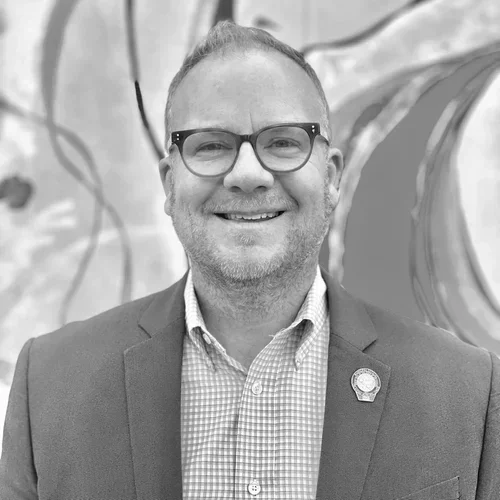
Matt Peacock has spent much of his career thinking about how cities grow—from both sides of the development process. An architect for about a decade, his work has focused on downtowns, main streets, urban cores, and infill projects. At the same time, he spent six years serving on City Council in Norman, Oklahoma, including four years as vice mayor.
It was through that combination of architecture and public policy that Matt eventually found his way to the Incremental Development Alliance. Unlike many IncDev faculty members, he didn’t begin by taking a training. Instead, his connection came through Alli Quinlan, whom he had known in college. After Donald Shoup, esteemed author of The High Cost of Free Parking, shared one of Matt’s policy changes, Alli reached out and asked Matt to join the IncDev faculty.
Becoming faculty introduced Matt to a broader network of people thinking deeply about the small details that determine what can—and can’t—get built in our communities. The experience has reinforced for him that “the more you learn, the less you realize that you actually know.” He points to fellow IncDev faculty member Eric Kronberg, whom he calls “the code whisperer,” as one of the people whose work has inspired him.
For Matt, development is also intensely local. “If you can’t walk to a project, I probably don’t want to do it,” he says.
That philosophy connects to one of the most important ideas Matt has taken from IncDev: the importance of investing in what he calls your “farm.” As he explains it, “If all you do is extract resources out of the soil, your soil becomes infertile, and you have to put resources back in.” Big box retailers like Walmart and Target, in his view, aren’t the farm. The farm is the place around you—the community where your investments can contribute something back.
One project Matt is particularly proud of is the Hillel building at the University of Oklahoma—a gathering place for Jewish students on campus. An older building on the site had been set far back from the road. In its place, Matt and his team created a prominent new visual feature at Campus Corner.
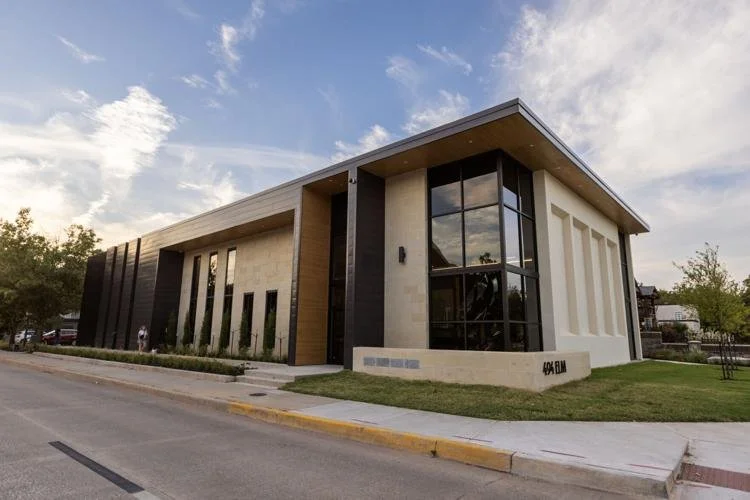
The new Hillel building at OU (Source: OU Daily)
The impact of the project became especially clear when a client walked through the completed space and teared up. For Matt, the project meant creating something meaningful for a community that had been through a lot—a place where people wouldn’t have to constantly look over their shoulders and wonder who might come after them next.
But working to change the built environment—whether as an architect or elected official—has also meant learning to navigate resistance. Norman is a university town, and Matt encountered a significant contingent of residents who wanted the city to remain as it had been when they moved there 30 or 40 years earlier. But cities aren’t static: they have to grow or they will die.
Professionally, he has also encountered bad clients, bad contractors, and bad developers, experiences that taught him how to identify the good partners and say no to the bad ones. In public office, meanwhile, he learned how to “push through the turbulence” when policy changes encountered opposition.
One of the policy changes Matt is proudest of began with parking. Looking at Norman’s city code, he landed on the idea that parking should be a function of the market, not a function of the building code. He helped change the language in the code from parking minimum requirements to parking minimum recommendations, giving developers and landowners more freedom to determine how much parking their projects actually need.
Today, Matt continues working on projects close to home. His advice to people considering an IncDev training reflects the same willingness to start small, learn, and keep moving forward: “Jump in with both feet.”
Development is anything but risk-free. People can make costly mistakes, and a new developer can quickly get in over their head. That is exactly why Matt sees value in learning from people who have already navigated the process. He explains: “The worst thing a first-time developer can do is go out there and try to build a 40-unit complex. Just go build an ADU in your backyard.”
For Matt, that small start captures much of what incremental development is about: learning by doing, understanding the place around you, and investing back into your own “farm.”
Thanks to video creator and storyteller Hope Henchey for the reporting for this article.