
Faculty Spotlight: Jen Acosta

Jen Acosta grew up in Bay City, Michigan and graduated from the nearby Garber High School, but lived all over the region. Eventually, she moved to Miami, Florida for graduate school. Her dad lived in Florida since she was 15, and that’s where she met her husband. They still visit often, but when they started thinking about raising kids, they knew they wanted to raise them in Michigan. The Midwest felt like the place where they could build a grounded life on the north side of the City of Midland.
Jen’s path to becoming a small-scale developer wasn’t linear. She started college set on pre-med and chemistry because she always wanted to make an impact and do good. Then everything clicked when she took a sociology class. She fell in love with the idea of studying community as a living system, a body at large, and understanding why people thrive in some conditions and struggle in others.
After obtaining her master’s degree, she worked for an affordable housing developer in Miami, and was drawn to real estate development because it blended everything she cared about. It wasn’t just housing units, it was housing paired with the supports people need, after-school care, services, program space, the things that help families stabilize and build a life that is not always in survival mode. Housing is part of life’s story, including how we age in place, maintain dignity, and stay connected to others rather than become isolated.
In 2015, Jen started her own company, and now, in 2026, this is year 11 for her firm, Acosta Real Estate & Development. In addition to real estate and development, she is a housing strategist and lead consultant for Housing Forward, a community-based initiative working to implement solutions and rehabilitate housing throughout Midland County and the surrounding region. Housing Forward is supported by local partners and lives under the umbrella of the Midland Business Alliance.
Her day-to-day work is a mix of market data, hands-on technical assistance, relationship building, and a lot of conversations that start with, “Okay, what’s the barrier here, and how do we get around it?”
In the conversation below, she talks about one of her current pioneering projects in Bay City, the Water Street Lofts—a contaminated former mill site that is being remediated and turned into over 90 new apartments and commercial spaces.
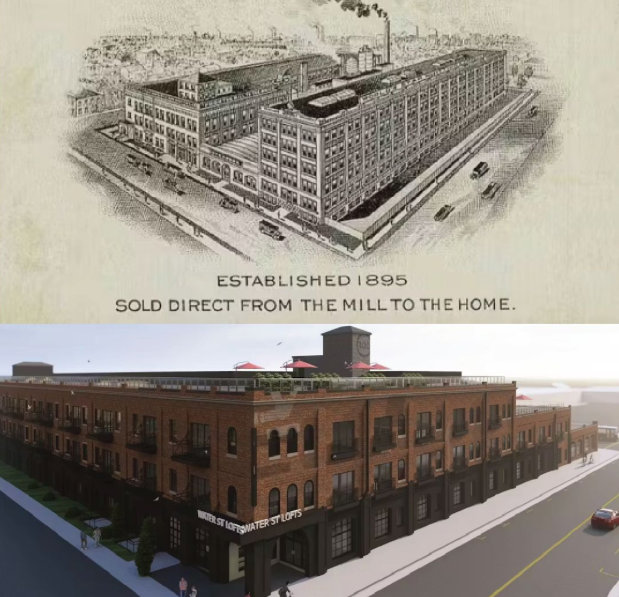
Above: A historic image of the factory that used to occupy this site. Below: Artist rendering of the new apartment building.
What is the origin story of Water Street Lofts? How did the project first get on your radar?
My family and I have done a lot of investing and developing throughout Downtown Bay City with historic buildings. As we were looking for our next opportunity, this parcel stood out: it had long been vacant, with a dilapidated warehouse on it. A classic case of "somebody oughta."
Did you face any opposition, obstacles, or setbacks? If so, in what ways?
Environmental due diligence was the primary obstacle. We worked closely with our state environmental agency, which supported the property's redevelopment by covering the cost of additional tests, borings, and a grant. While that process took time, it benefited the financial side of the project and upheld our values: doing things right and ensuring quality.
Up to this point, what would you do differently if you could start over?
We explored incorporating an existing, nearly obsolete building that completes the block. The owners weren't interested in selling at the time. They're interested now, but our project is fully designed and under construction. It feels like a missed opportunity to have more frontage on the main street into Downtown, but the timing didn't align.
How and when did the financing, or capital stack, come together?
We began working on the financing in the fall of 2024, as we entered schematic design, partnering closely with the City of Bay City and the Michigan Economic Development Corporation (MEDC) to ensure this brownfield redevelopment was as much a priority for them as it was for us. We secured local approvals by the spring of 2025, and the Housing Tax Increment Financing (HTIF) plan was submitted to the State Housing Authority in June for approval. In early June, we received a Letter of Intent for the MEDC CRP loan participation. It's non-binding, but it opened the door to begin underwriting for the board's consideration.
At the time, we'd heard concerns about how much funding the MEDC would have in the upcoming fiscal year, so we decided to do everything in our power to present the project at the board's September 2025 meeting, ahead of the next state fiscal year in October. Essentially, we had to complete all documentation to underwrite both our senior loan (over $10M) and the MEDC loan (over $4M) in 35 business days. That included finalizing all construction documents and getting our contractor comfortable with a guaranteed maximum price construction contract.
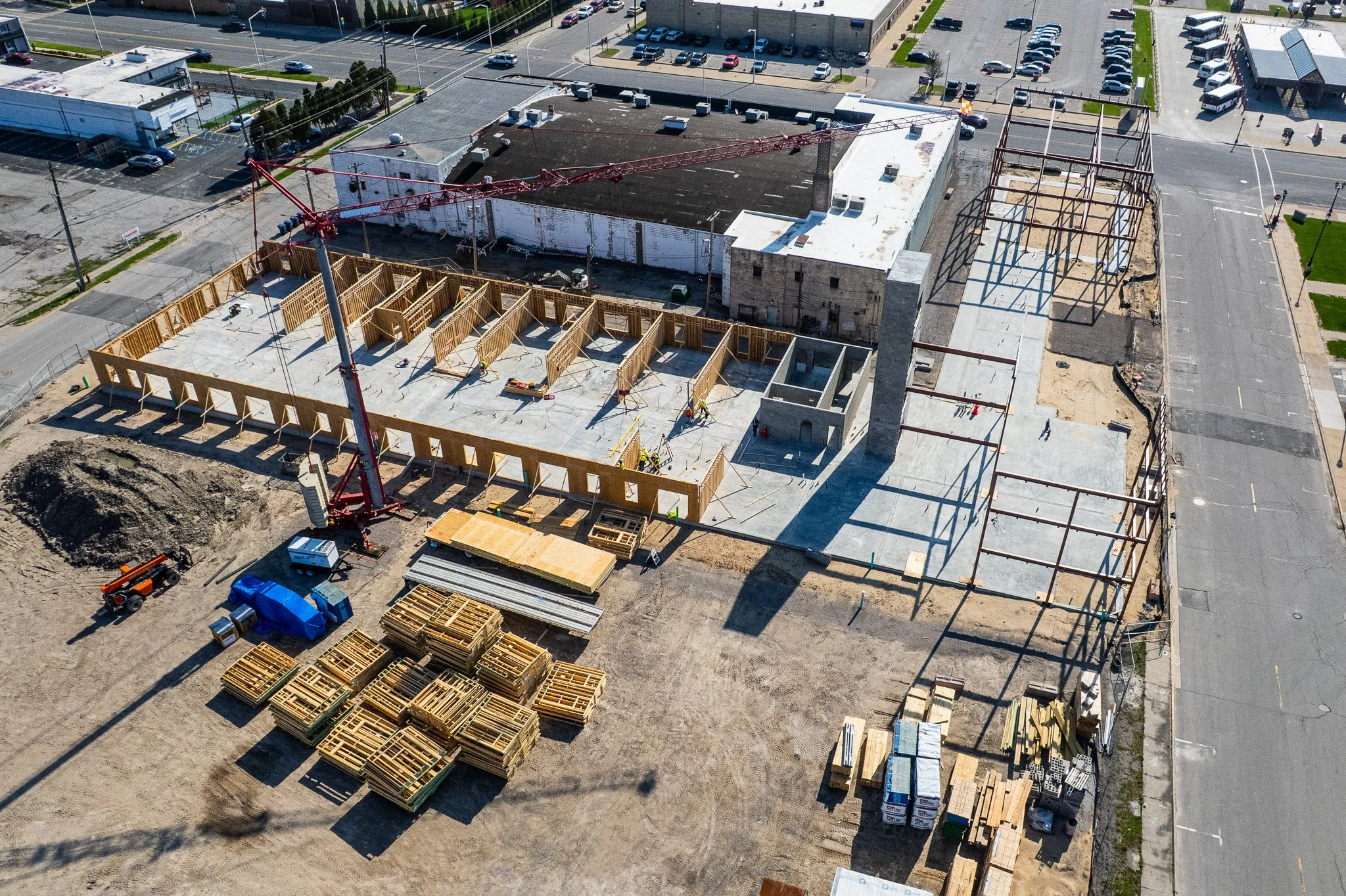
The Water Street Lofts, in progress
Would Water Street Lofts have happened without the Housing Tax Increment Financing Plan or the low-interest loan from the Michigan Economic Development Corporation (MEDC)?
No. This project would be impossible without these layers of financing. The tax increment financing extends over the life of our senior debt and reduces the property taxes during that period, so we can afford to pay down the commercial mortgage and the MEDC Community Revitalization Program (CRP) loan.
How did you originally get connected with the Incremental Development Alliance?
I was introduced to IncDev through Bernice Radle. She was speaking at a Legacy Cities conference and we instantly hit it off talking about my adaptive reuse projects and her preservation work. I attended the IncDev Workshop during CNU Seattle and when I met with leadership at the time, I had a folder full of back-of-the-envelope scenarios I'd run in the potential of every vacant building in my downtown. Our conversation quickly evolved to my ability to represent IncDev as the work across the State of Michigan was increasing, and my ability to bring my love of pro formas to the team.
How has the Incremental Development Alliance helped you in your career and on this project?
The community of like-minded professionals, alumni, and local leaders is what makes it all meaningful. Being a community developer is really difficult work, and sometimes you wonder why you do it. Having an incredible network of peers and professionals I can run ideas past, people driven to do the same things, is what helps me most.
What advice would you give others aiming to start small-scale development in their communities?
It has taken 10 years of investing in properties in this neighborhood for us to afford the cost of new construction, and it still requires assistance. If you're working in a community where the economics are upside down, you have to rebuild them: rehabilitate existing buildings and work to establish a strong tenant base that can revitalize the area. Growth may come eventually, but restoring the existing character and elevating it is critical.
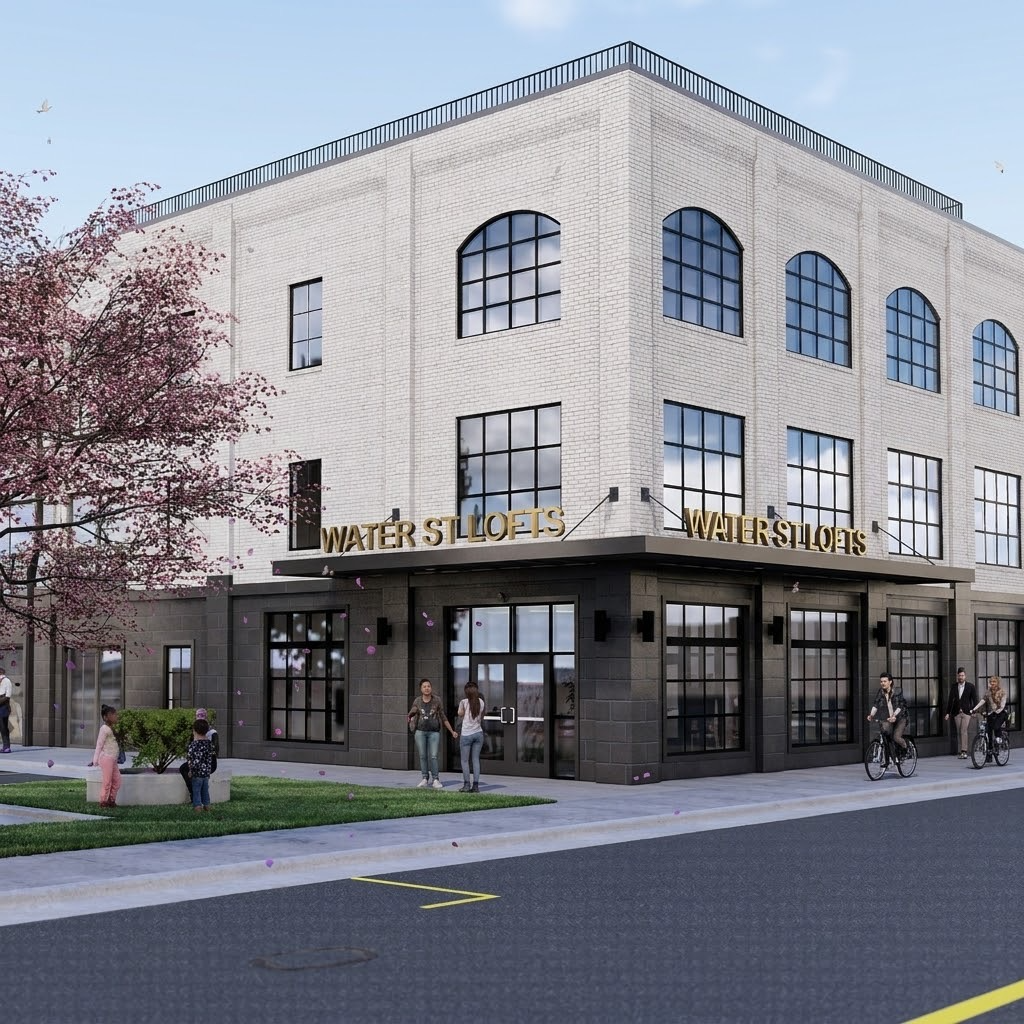
Artist rendering of the completed Water Street Lofts
Interested in learning from experienced developers like Jen Acosta to help build local prosperity and increase housing options? Check out our upcoming trainings, or visit this page to find out how to bring a training to your city.