
Faculty Spotlight: Joel Dixon
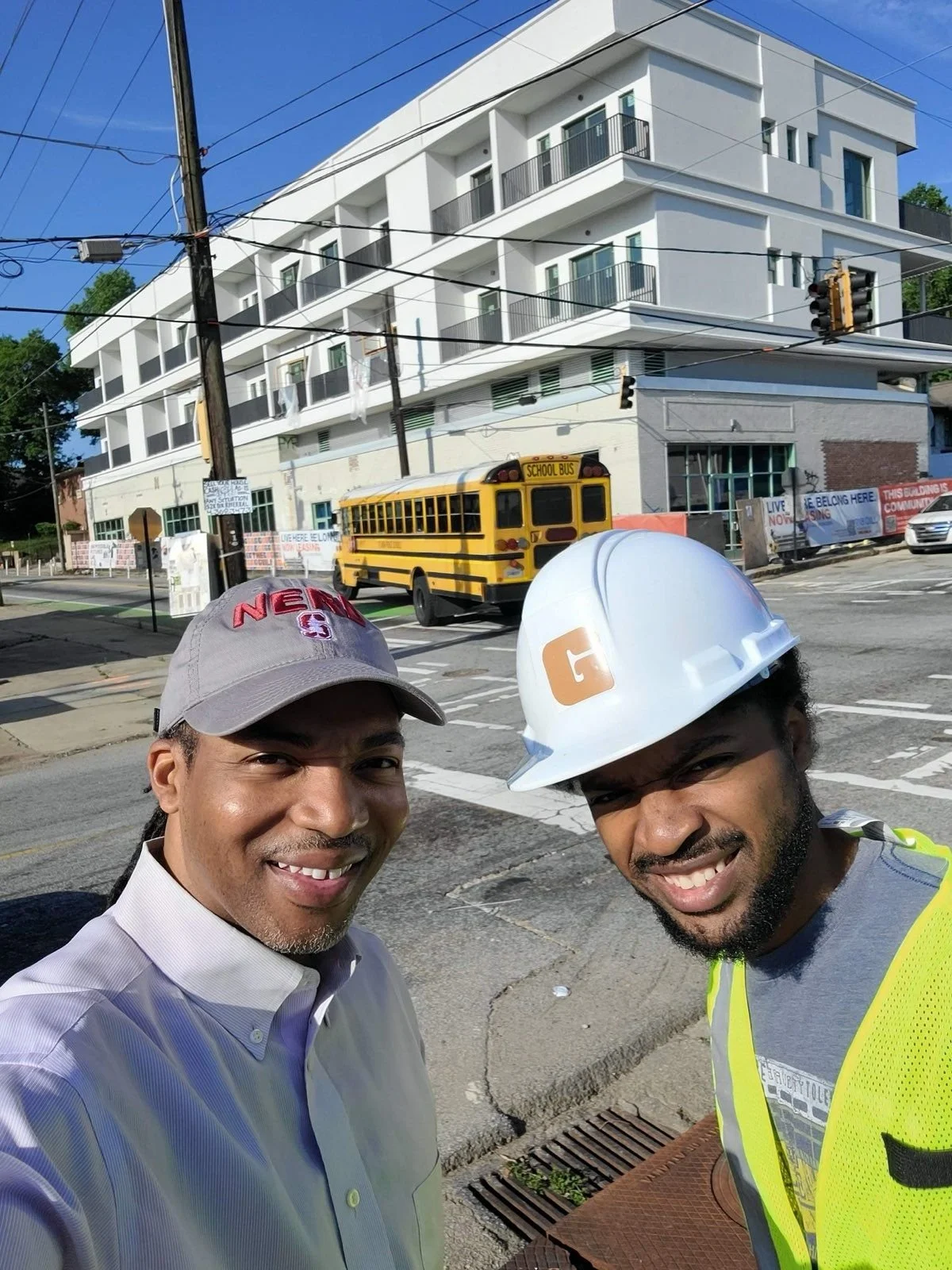
Joel Dixon (left) and Avery Ebron (right, member of The Guild and an IncDev training alum) in front of the 918 Dill development in progress
Joel Dixon is a faculty member at the Incremental Development Alliance and Co-Principal of Urban Oasis Development, a real estate company focused on residential and commercial development on Atlanta's south and westside. Born and raised on the westside, Dixon is dedicated to building secure, inclusive neighborhoods in the community that raised him.
After beginning his career in tech, Joel shifted to real estate in 2011 as widespread gentrification started reshaping Atlanta, determined to create neighborhoods that better accommodate growth and diversity. During his years as a developer, Dixon has helped to build single-family homes, commercial projects, affordable apartments and more.
Perhaps his most unique and forward-thinking project is the new 918 Dill Ave development, which unites a community land trust, grocery store, gathering place, and apartments. 918 Dill started with a vision: to create a cooperatively owned space that would combat gentrification, incorporating both residential and commercial space. Dixon had worked with the Atlanta Land Trust in the past and was eager to pursue a collective ownership model of some sort.
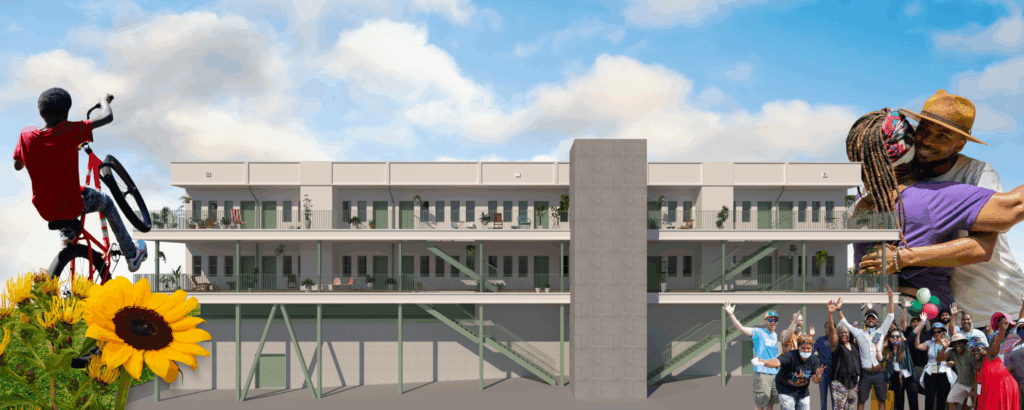
Rendering of the 918 Dill Ave project
His development firm, Urban Oasis, ended up partnering with The Guild, which develops community-owned models of land, housing and real estate that put power back in the hands of local people, especially those that have been historically excluded from building wealth. “It was just a natural fit,” says Dixon, “because the Guild was already thinking about some of this cooperative ownership, stewardship type models, economic justice models, but they didn't have real estate experience.”
As Dixon tells it, The Guild saw that as a major gap, because “everything always came back to [the fact that] it was still a real estate problem.” So Dixon and Urban Oasis brought the needed real estate experience to the table. At the Incremental Development Alliance, we see so many projects like this, where community partners find creative ways to work together to benefit their whole neighborhood.
In the case of Dixon, he was deeply committed to his own neighborhood and saw an opportunity in the 918 Dill Ave property, which had been vacant for many years, but historically served as a commercial hub in the Capitol View neighborhood of Atlanta. Dixon actually initially suggested tearing the property down and building anew, but The Guild was dedicated to adaptive reuse (taking historic spaces and updating them for the modern era). So Dixon said: “I’m here with you. Let’s go.” The Guild was able to secure equity capital, while Urban Oasis provided real estate experience and assisted with debt and grant funding. Together, they brought that vision of a cooperatively owned, affordable space to life.
The project would encompass 18 one- and two-bedroom apartments—all of which would be built as new floors above the existing single-story building—plus a ground floor grocery store, small business spaces and multiple communal gathering areas. All of it was undergirded by a Community Stewardship Trust: a way for communities to co-own and control properties in their own neighborhoods. Briefly, this model allows neighbors to “invest as little as $10 per month to help [...] shape the future of local properties through community control by voting, democratic participation, and collective resource decisions.”
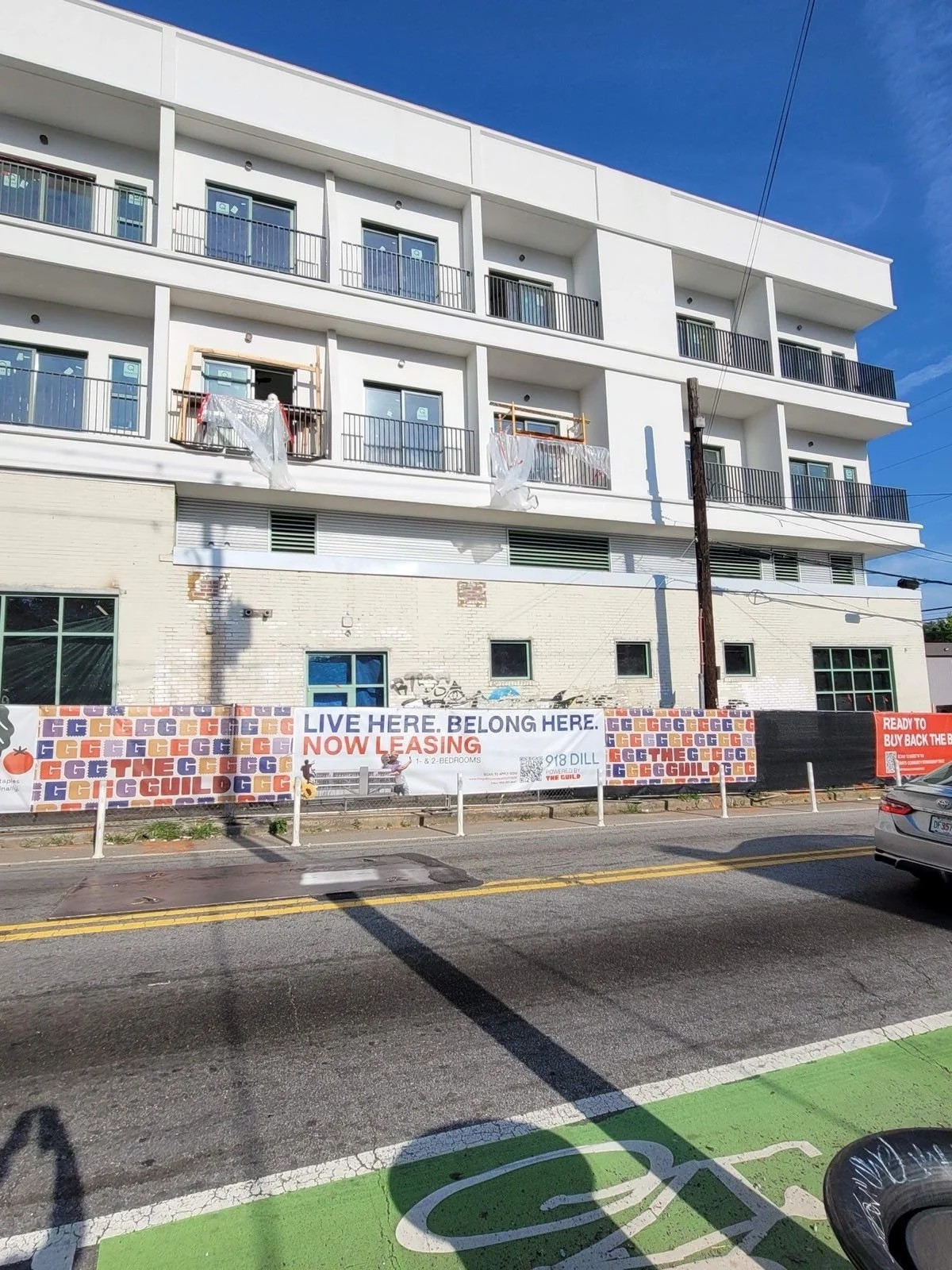
918 Dill Ave in progress
What’s the difference between a community land trust and a community stewardship trust? A community land trust (CLT) removes land from the speculative market to keep housing permanently affordable by separating land ownership from building ownership. A community stewardship trust (CST) is an equity-building model that allows local residents to directly invest in and co-own neighborhood commercial and mixed-use real estate.
Unsurprisingly an effort of this magnitude—combining renovation of a historic property, commercial and residential spaces, plus energy-efficiencies goals—encountered plenty of hurdles. First was the cost, which unfortunately ballooned from an initial $7 million estimate (pre-COVID) to ultimately $11 million post-COVID, with increasing costs of labor, materials and interest rates. Amidst that, their construction lender walked away from the deal, so they had to pursue a new lender mid-project.
Overall, the development of 918 Dill Ave involved a complex capital stack including government funding, CDFI funding, and a mix of grants and loans. “You have to have the right type of capital to do a project like this,” says Dixon. “And this took what largely is an equity-heavy capital stack.” A typical project might be 80% debt to 20% equity. “This project is basically 50 to 55% equity, which is very difficult to get right, just to have that amount of money in cash from somebody giving it to you. You can't do this kind of project in the way that we did it without having some strong equity. Then you also need capital partners that are very impact connected.”
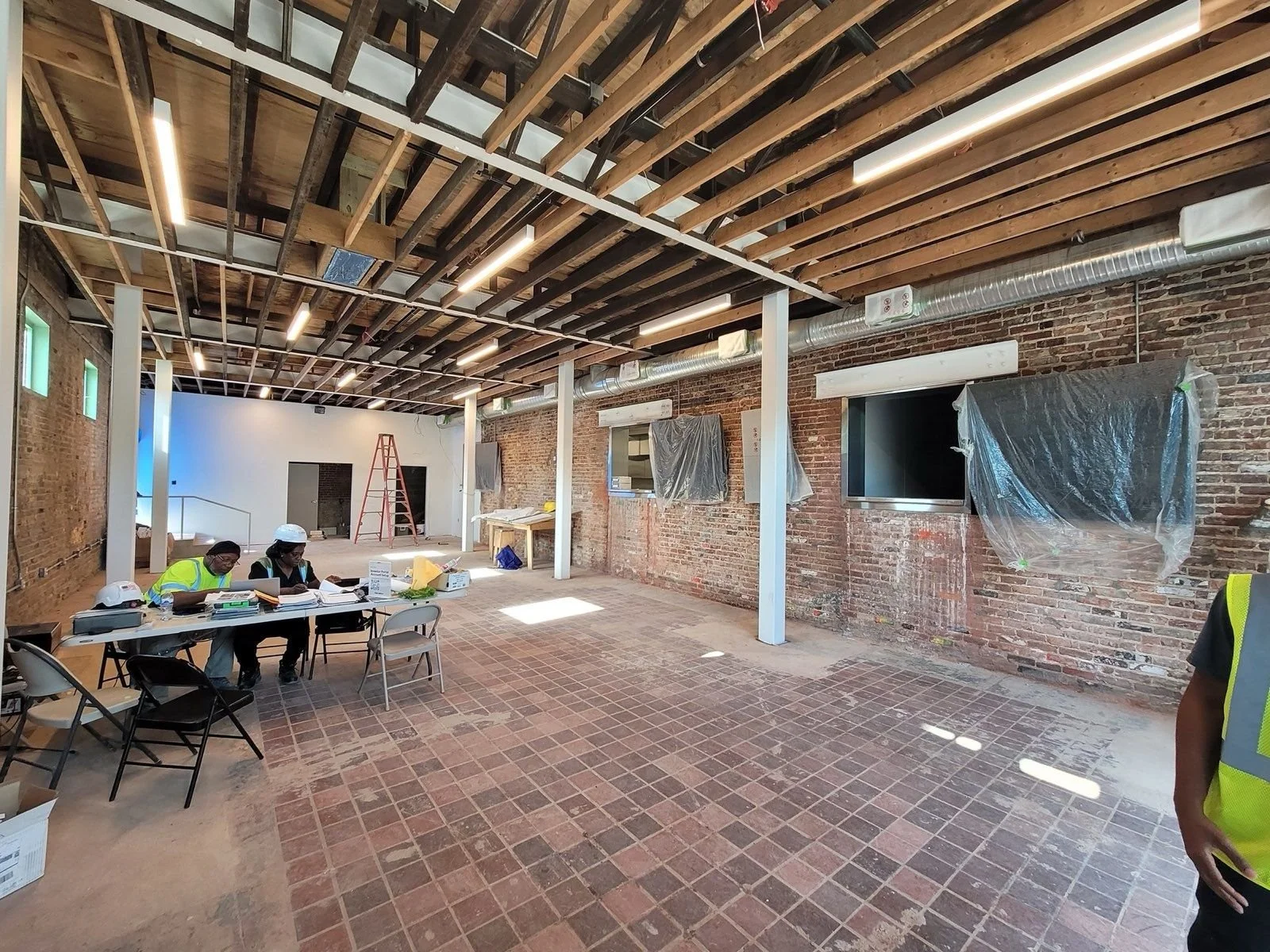
Interior work at 918 Dill
Thankfully, while there were significant financial hurdles to overcome, 918 Dill Ave faced little opposition from the surrounding neighbors (often a sticking point when a project of this scale and newness is proposed). Dixon says, “That's because we put into place all of the principles that we had learned through the years, and what IncDev teaches us as well, which is: connect with your community, connect with those who are in the street next to you and bring them alongside the conversation.”
As part of this project, the Incremental Development Alliance actually came to Atlanta in 2025 and worked with Dixon, the Guild and the Atlanta Neighborhood Development Partnership to offer a set of workshops and an ongoing learning cohort for folks in Capitol View and surrounding neighborhoods to build a deeper understanding of small-scale development tactics, softening the ground for this unique project.
918 Dill Ave will be finished and begin welcoming tenants in the fall of 2026. Through this project, an old, neglected space gets a new lease on life while residents get access to new housing and business opportunities. And all of it has been undertaken with a focus on preserving and building on neighborhood wealth, rooted in the people who live there.
Interested in learning from experienced developers like Joel Dixon to help build local prosperity and increase housing options? Check out our upcoming trainings, or visit this page to find out how to bring a training to your city.