What You Need to Know About Housing Finance + Incremental Development
Financing is one of the biggest barriers to rebuilding a healthy ecosystem of small-scale development. Many communities have changed their zoning, adopted housing plans, or expressed support for missing middle housing, but the projects still do not happen at the pace people expect. One reason is simple: the capital system is not built for the kind of small, local, incremental projects that many neighborhoods need most.
Read More
Zoning
By: Chris Allen
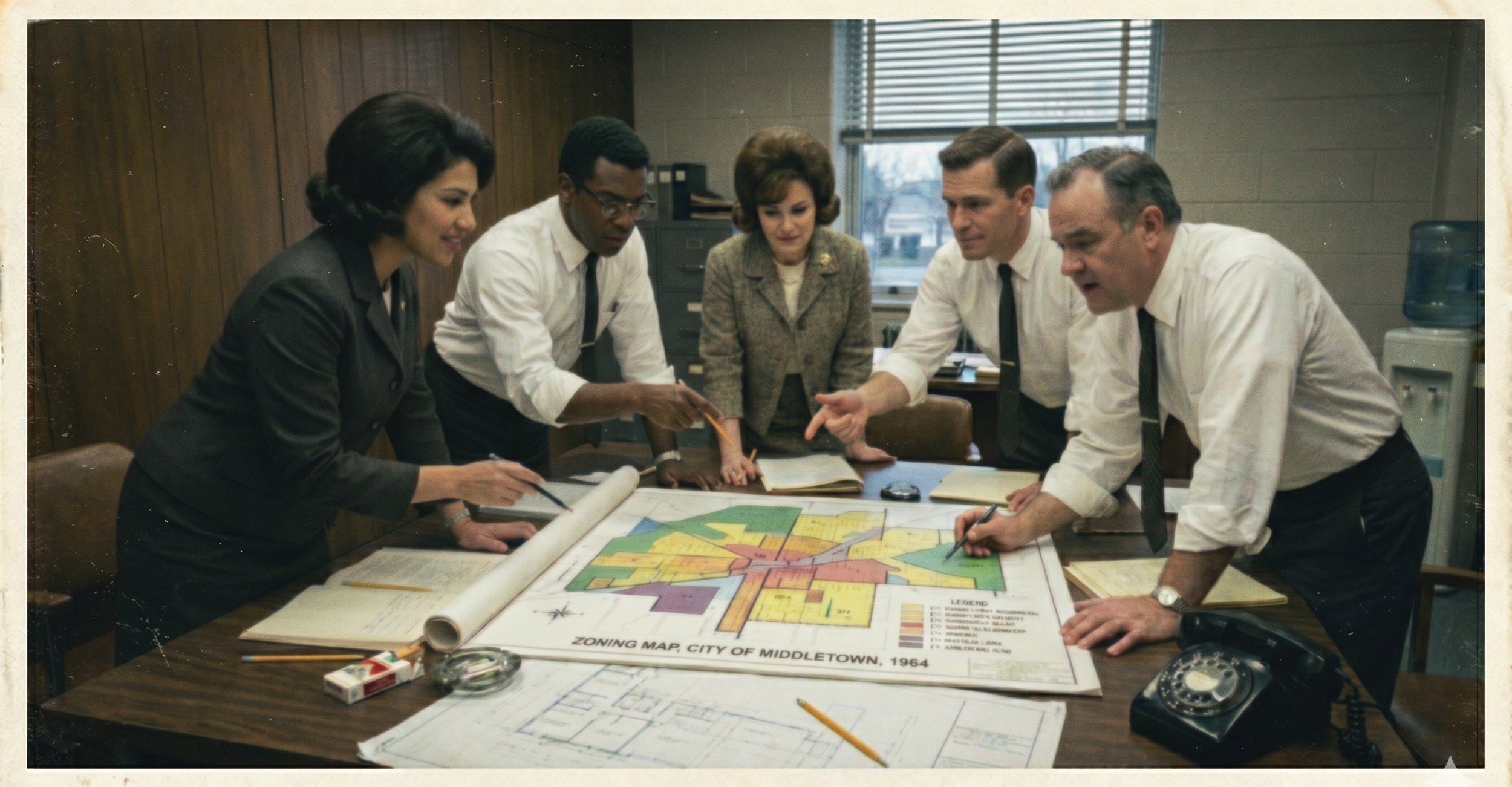
Zoning is one of the most powerful tools local governments use to shape housing, transportation, public finance, neighborhood life, and local economic opportunity. At its best, zoning provides a clear and predictable framework for good development. It helps neighbors, builders, city staff, and public officials understand what can be built, where it can be built, and what standards apply. At its worst, zoning becomes a system for freezing communities in place, separating compatible uses, mandating expensive development patterns, and making normal neighborhood evolution illegal.
Read More
Missing Middle Housing
By: Chris Allen
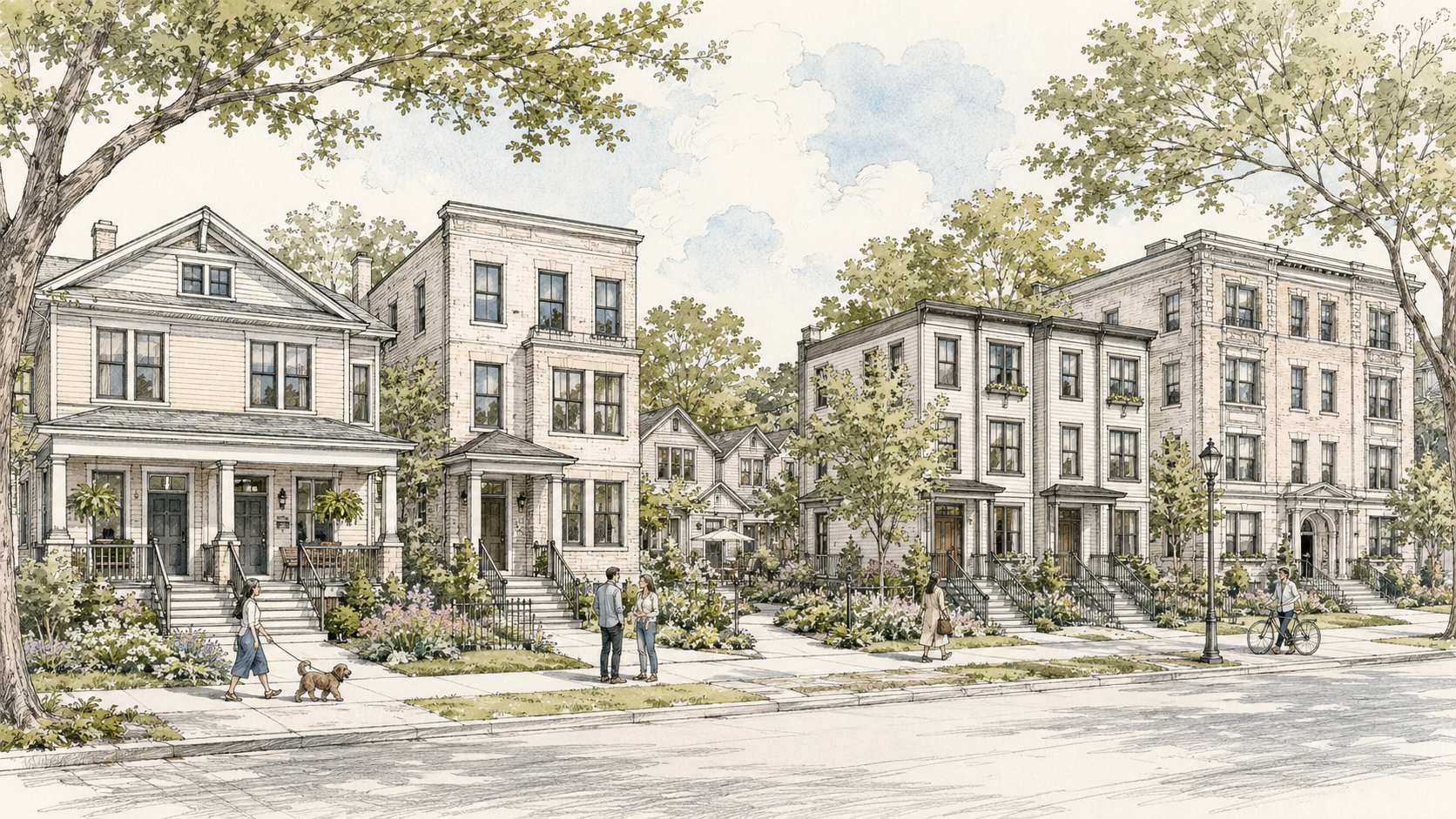
Missing Middle Housing is the range of house-scale, multi-unit housing that sits between detached single-family homes and large apartment buildings. It includes duplexes, triplexes, fourplexes, cottage courts, courtyard apartments, townhouses, live-work buildings, and small apartment buildings. The term was coined by Daniel Parolek of Opticos Design to describe housing types that are “compatible in scale with detached single-family homes” while providing more choices in walkable neighborhoods.
Read More
Accessory Dwelling Units
By: Chris Allen
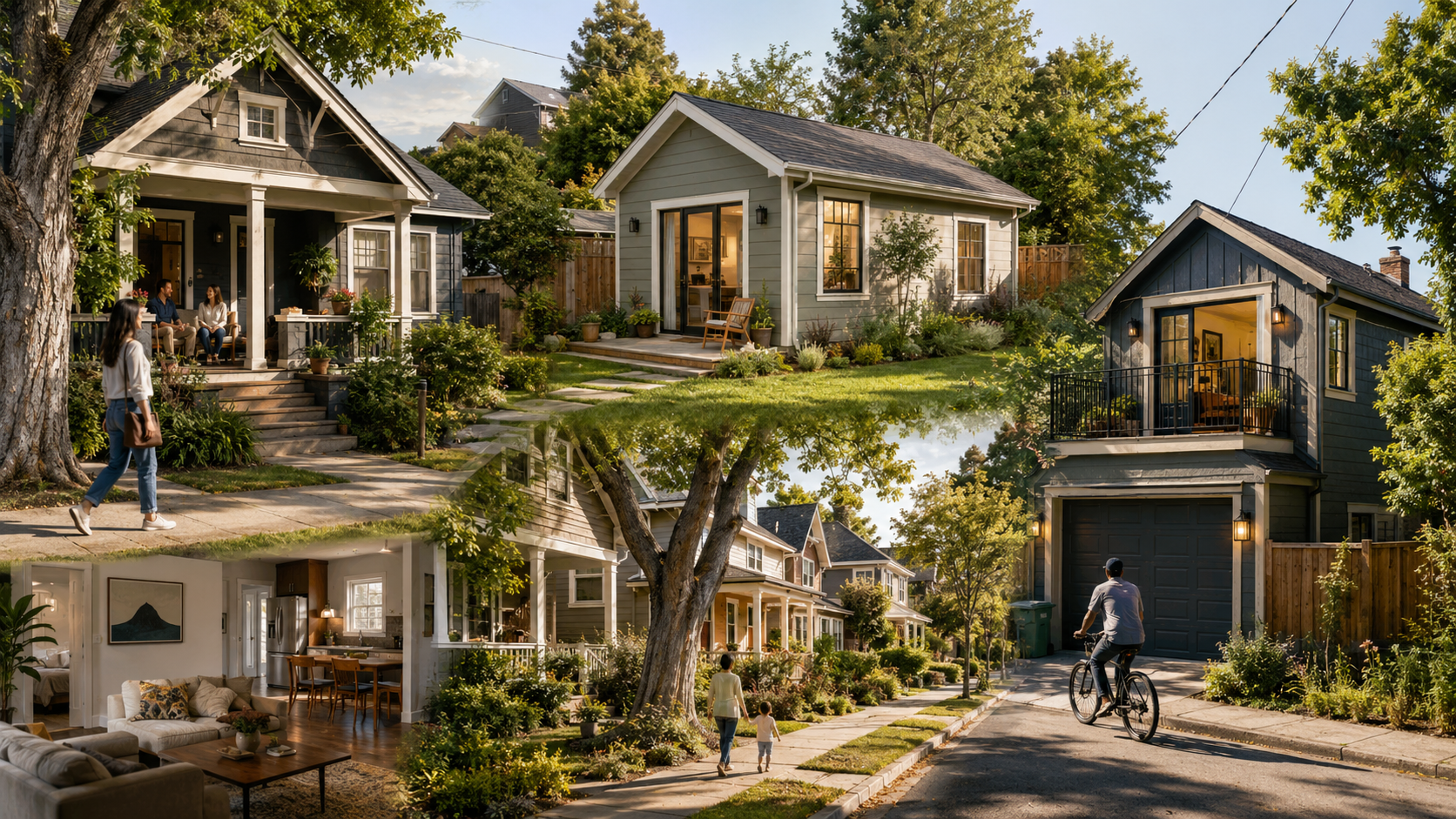
Accessory dwelling units, or ADUs, are one of the most practical first steps a community can take toward a more incremental, affordable, and adaptable housing system. An ADU is a small, independent home located on the same lot as a primary residence. It may be a backyard cottage, garage apartment, basement apartment, internal suite, or small addition.
Read More