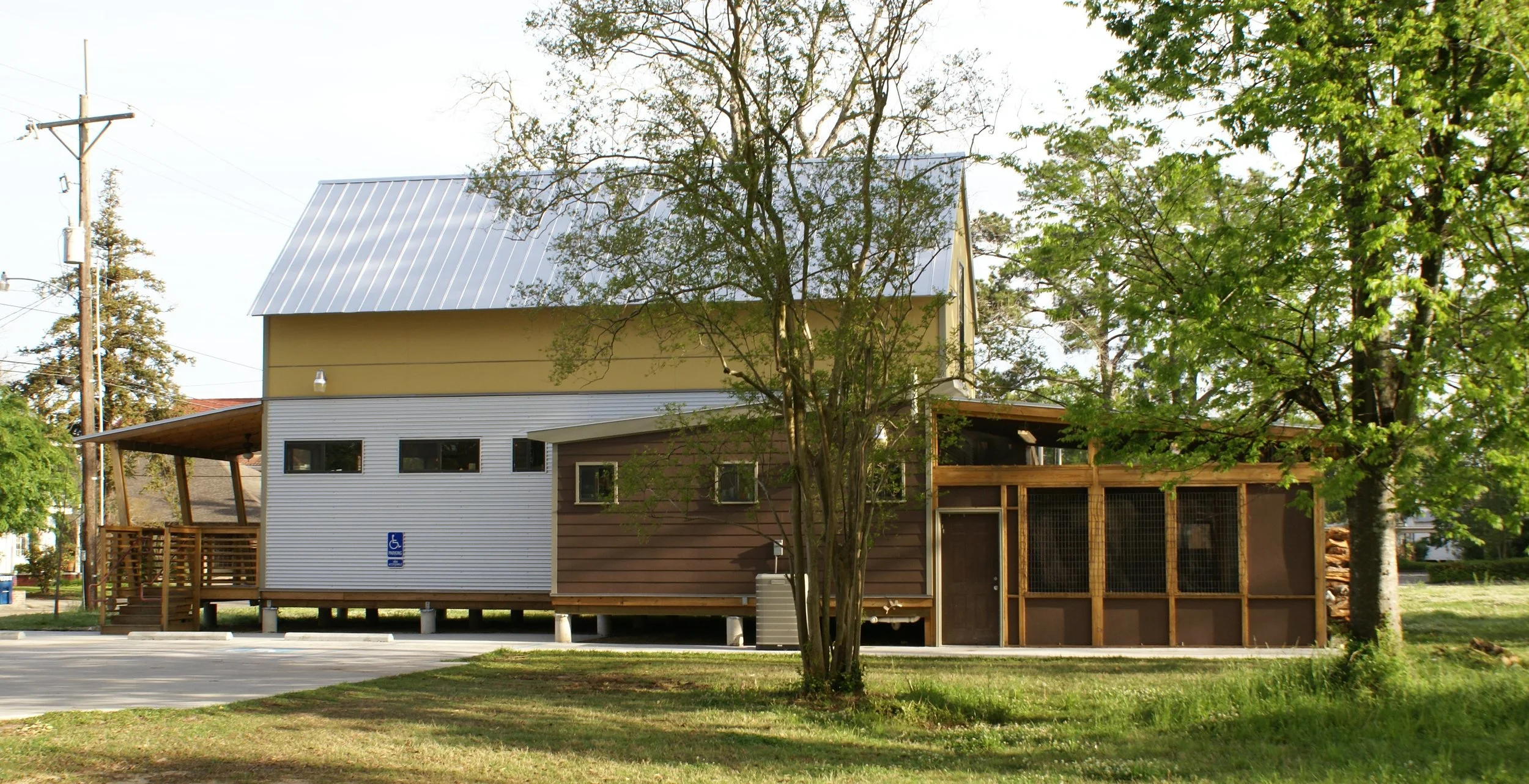
Gregory Walls’ St. John Development
by Eleanor Anderson
Gregory Walls graduated with a degree in Architecture from the University of Louisiana at Lafayette. He opted to skip formal licensing, instead pursuing the design/build side of development.
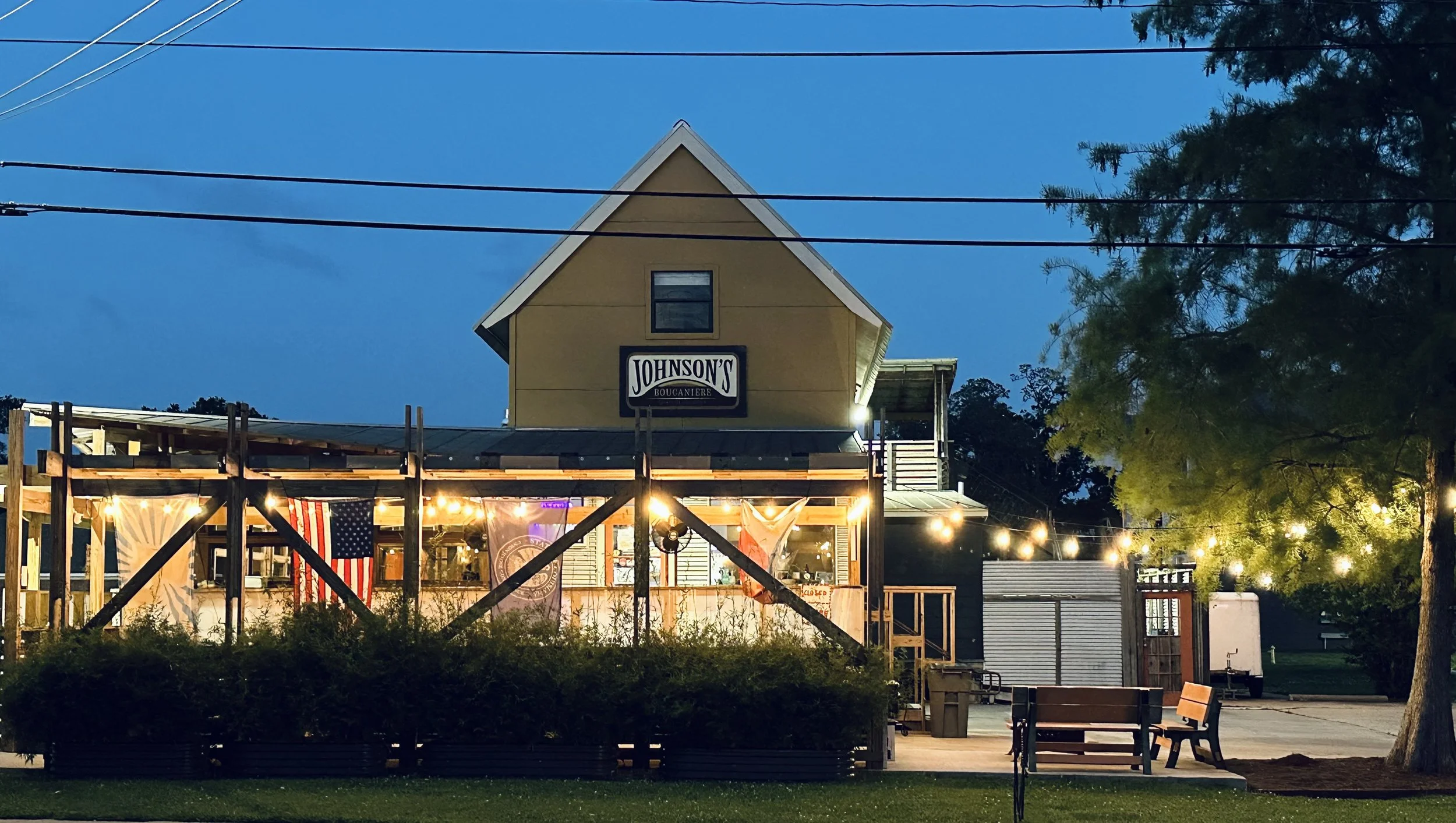
Family can be seen at the heart of the projects Greg has developed. His family’s history and future is found in both their local restaurant, Johnson’s Boucainière, and the St. John Street development.
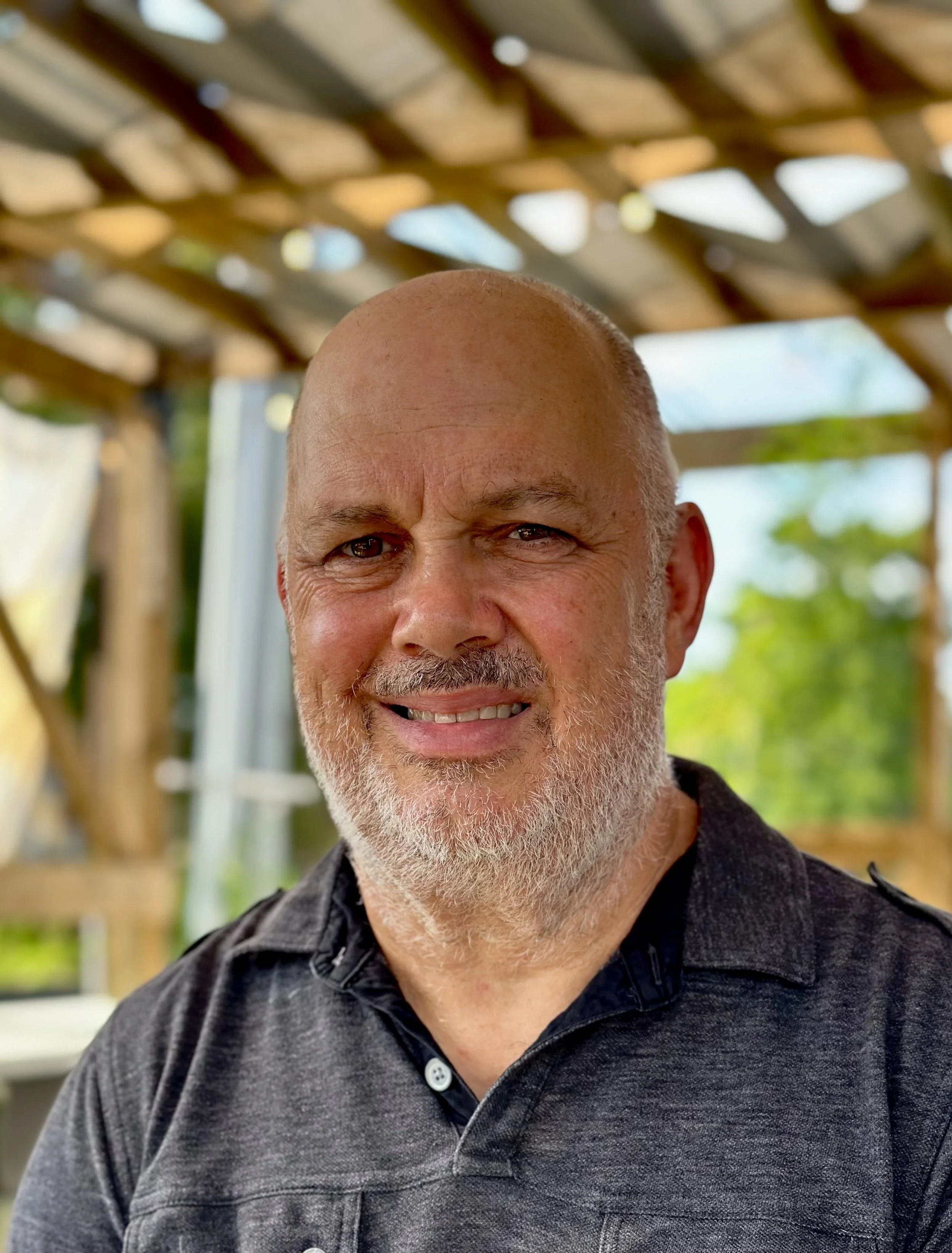
Gregory started out in the construction industry over 30 years ago, working with his father, C. Phil Walls. He started his firm, Walls-Studio in 1994.
Gregory is philosophical about his early years in the field: “I wish I wouldn’t have had to build in subdivisions for the first 10 to 15 years of my life, but it was a path for me to be able to do this, now.”
In 2000, before Hurricane Lily, he purchased a building in downtown Lafayette. For a dozen years, that building housed architects, an art gallery, and Walls Building + Design. In 2012, it became the home of Rêve Coffee Roasters.
Q&A
When did you take the IncDev course?
During a Strong Towns convention in Cincinnati, so maybe 2 or 3 years ago. At the time I was the chair of the Downtown Development Authority board here in Lafayette. Myself and the CEO, Kevin Blanchard and I, attended the Strong Towns Gathering and IncDev overlapped with that conference.
Tell me about the restaurant and your project. Was the building a rehab or a new build?
We built it.
Right after Katrina, this almost two-acre chunk of property came available for sale downtown. We bought that, and the restaurant was the very first project that we built on that site.
How did your restaurant, Johnson’s Boucanière, get started?
My wife’s father owned Johnson’s Grocery in Eunice, Louisiana. It was a family business that had been operating since 1937. Unfortunately, in 2005, it closed due to the rise of big box stores. In 2007, my wife and I had the desire to learn how to make the smoked meats and boudin the store had long been known for, with the goal of keeping the recipes in the family.
In 2008, she wanted to share them with the public once again.
While Johnson’s Grocery had been a dry goods store that specialized in smoked meats and boudin, Johnson’s Boucanière emerged as a new concept: a restaurant built around preserving and continuing those traditions.
Form shaped by history:
To me it was an important building because the rest of the story her dad had [about the grocery]. I wanted the building to honor the past but also let the building reflect that it’s something new.
We used regional materials, but oriented them in different ways. The metal cladding was oriented, instead of vertically, horizontally. You have typical brick pier-and-beam construction here in south Louisiana. Instead of that, we used round concrete columns. So, we basically try to honor the past and the present.
On a personal level, this project holds special significance. It’s not just a building; it represents my wife’s vision for her restaurant, inspired by her father’s store. It is a tribute to their legacy and a celebration of bridging the past with the present, in both architecture and culinary traditions.
What else has been built on the site? What is existing on the site now?
The development has grown incrementally.
In 2009, we retrofitted the storage area above the restaurant. We created a one bedroom apartment where our family lived for three years.
Then, in 2012, we built a live-work residence which we still occupy. I have a 1,200 square foot ground floor office and residence above.
In 2021, we constructed a triplex. I developed it with my daughter. It has one owner-occupied unit and two rental units.
Under construction right now, we have completed two out of five stacked flats that we are building on the southeast corner of the site.
Future phases will introduce higher density buildings on the remaining parcels.
You mentioned that IncDev workshop helped you better understand the pro forma and its function in planning and financing a development. How is that knowledge helping you with this project?
I have always dealt with banks but never dealt with investors or formal partnerships. I’ve always worked off of lines of credit all my life. I hadn’t really done pro formas before.
I’m still doing small scale projects right now, but once we get to these higher density projects, each building is going to be north of $2 million or more.
The pro forma helped me run the numbers and make sure projects are feasible and profitable. That’s been the biggest benefit for me, especially as we move into larger scale projects that will require such skill sets.
Would you recommend this class to others?
Absolutely. It’s a great crash course for anyone interested in infill development.
It helps people understand what they are getting into and gives them a path forward. I think for me it also emphasized the value of incremental growth.
Some people start out with an ADU (Accessory Dwelling Unit) behind their house and then move to a duplex or stacked flats, then they grow from there. IncDev shows a clear path forward in growing organically and building gradually.
You know, eating the elephant one bite at a time.
This interview was edited for length and clarity.
Read more:
About Gregory Walls and his St. John development
An interview with Gregory on the podcast Developing Lafayette
About the writer:
Eleanor Anderson is a writer living in Atlanta GA. She has over 20 years of writing experience including: newspaper journalism, technical, business, grant, and academic writing. She lives with her husband, 3 cats, and one dog.