
Alumni Story: Bryce Morrow
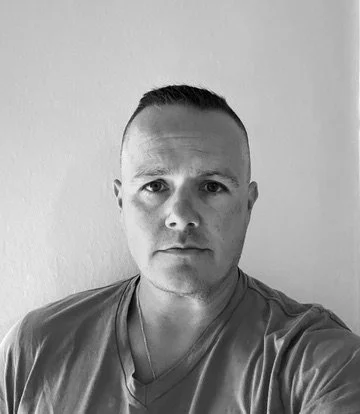
Before diving into larger projects, Bryce Morrow built his experience one step at a time across Oregon's Willamette Valley. Starting in Portland and expanding to Oregon City, Canby, and now Gladstone, his work reflects a consistent philosophy: create places that strengthen community by thoughtfully reusing existing buildings and investing locally.
Morrow's first development projects were modest. In 2013, he built an accessory dwelling unit (ADU) in Portland by converting the basement of his home into an 800-square-foot apartment. The project was one of the first completed under a city program that waived System Development Charges (SDCs) for ADUs. "It was such a great program for the city to build in more density in these already established residential neighborhoods," says Morrow.
The SDC waiver saved him roughly $25,000 and demonstrated how relatively small policy changes could encourage incremental housing in established neighborhoods.
Portland still offers SDC waivers for ADUs, though they now come with conditions. Properties must be owner-occupied or rented on a month-to-month basis for ten years, with those requirements enforced through a recorded covenant.
As Morrow continued taking on projects, he realized he wanted more control over the development process. Rather than relying entirely on outside general contractors, he earned his own Commercial General Contractor's license.
“I’ve done a couple of different projects where I’ve hired out general contractors,” says Morrow. “Then you quickly find out that [it] is just a project management role. All the work is done by subcontractors. It’s a relationship business. It’s project management, and nobody will care about my projects more than me.”
Today, he works with many of the same subcontractors from project to project, building long-term relationships that help each development run more smoothly.

One of Morrow's most recognizable projects began not as a business plan, but as a hobby. He and his father-in-law started brewing five-gallon batches of beer on the kitchen stove, eventually taking over much of the kitchen. When they moved into a home with a detached garage, the operation grew.
"I thought, 'Boy, this is where we're going to put the brewery,'" says Morrow.
With dedicated brewing space and larger equipment, production quickly expanded beyond what friends and family could consume. The turning point came thanks to an unexpected conversation with a neighbor.
As Morrow tells it: “We lived at … a dead end [with] a park at the end. So, this guy would walk by with his dog. He’d see the garage door open, and there’d be brewing going on. One day he comes in, he’s chatting, tasted beer. He’s like, hey, you know, could I buy this?” It turns out that the neighbor owned four barbecue restaurants.
Morrow and his partners navigated the federal, state, and local licensing process to become commercial brewers while continuing to operate from their residential garage.
“We jumped through all the hoops and made it possible [to] produce beer and then sell it direct to wholesale clients from my garage,” says Morrow. “After that got going, it was really a question of if we were going to make it a real brewery. I believe at the time we were the only licensed production brewery in a residential home.”
The brewery's name reflected its roots. Oregon City was Morrow's hometown, where he grew up and graduated from high school.
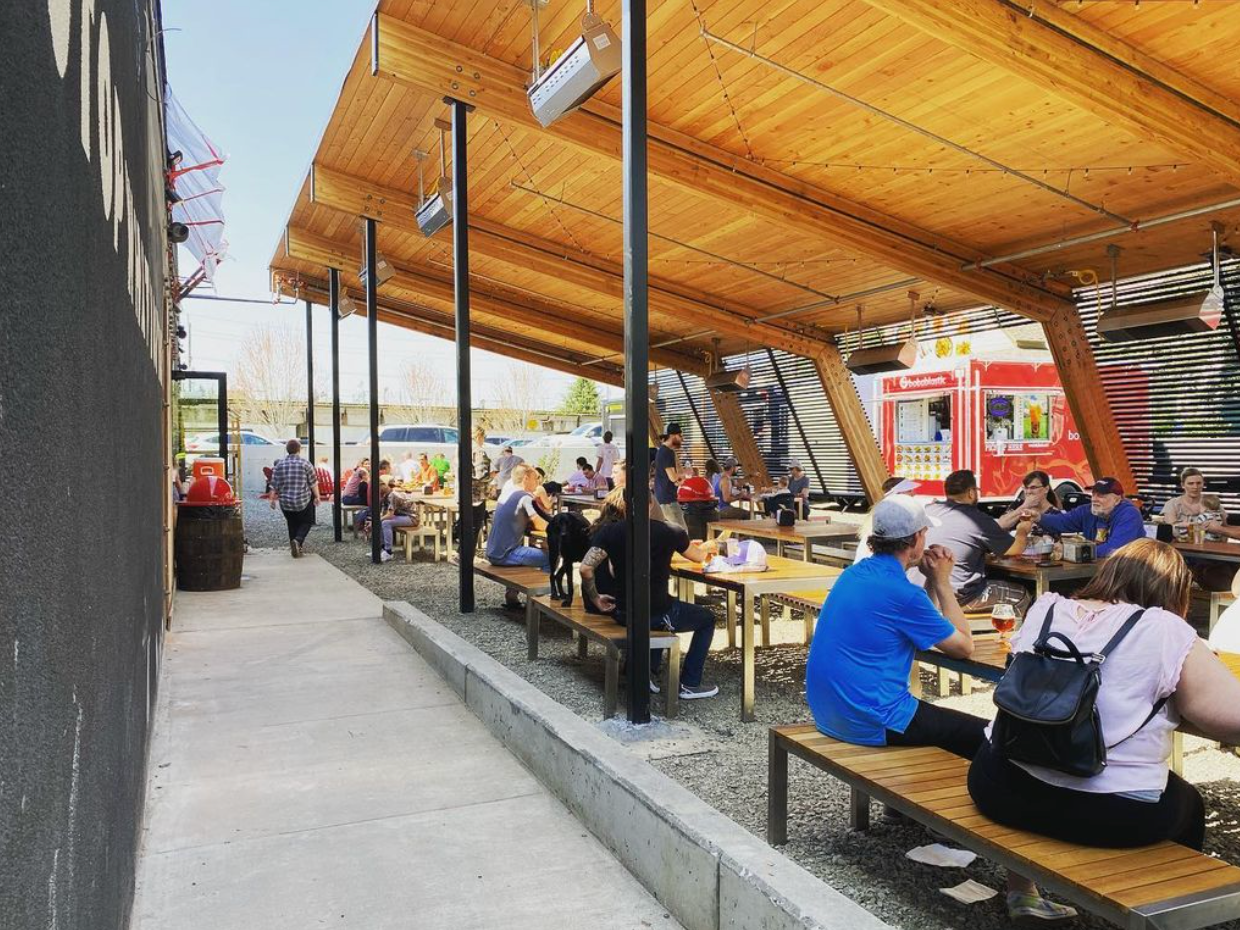
"We're not that clever," he says. "It ended up being Oregon City Brewing. It will be 12 years old this year. I founded that with just my father and father-in-law.”
As the brewery grew, it moved into a renovated 1930s commercial building in Oregon City, with Morrow serving as general contractor on the rehabilitation.
"That's kind of rare when you're a developer," says Morrow. "You build something, and then you end up being the principal tenant there long-term."
What began as a hobby turned into a thriving, award-winning, family-focused, local business. —and laid the foundation for larger redevelopment projects.
One of those opportunities emerged in nearby Canby, an agricultural community about 35 minutes south of Portland. There, Morrow won a competitive Request for Proposals to redevelop the city's former library building, a structure that had previously served as a hardware store.Rather than demolish the building, his proposal focused on preserving and adapting it for new community uses.
"The real catalyst for the project was this Oregon Main Street Grant," says Morrow. The city had already secured a $200,000 grant through Oregon's Historic Preservation Office before Morrow purchased the property, and the funding remained attached to the building.
“I wouldn’t have actually went after the project without that grant already in place,” he says.
A second grant, worth $75,000 through the Oregon Small Business Sustainability Fund, helped purchase equipment for the brewery business, including walk-in coolers, water heaters, and portions of the HVAC system.
"A lot of these projects, you have to be creative with the capital stack," says Morrow.
Although rehabilitating the aging concrete building cost more than starting over, Morrow never questioned the decision.
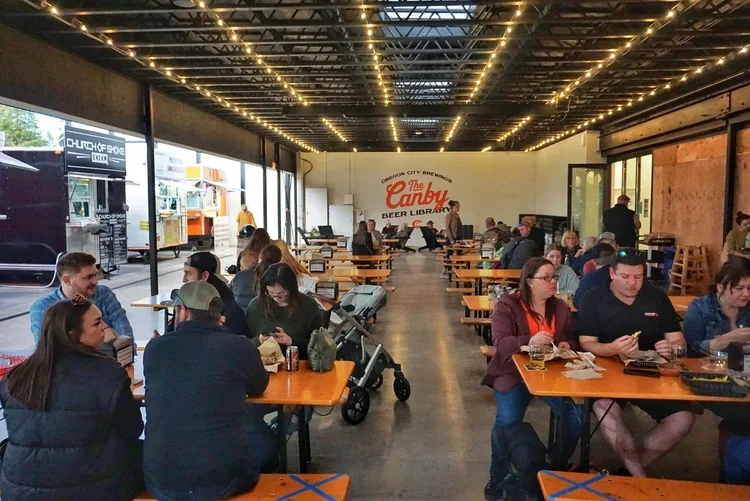
“It would have been a lot cheaper to really just bulldoze the entire thing and build it,” he says. “But it was cool. We saved an old building.”
Today, the building is home to a tap room and a carefully curated collection of food carts. The Friends of Canby Library has a space to display and sell books for the benefit of the library.
The Canby project created downstream benefits and opportunities for others, including the revival of the neighborhood, the establishment of more retail and an employment center.
"If you can just make your little block better, then it kind of cascades to everything else," says Morrow. "That's what you want."
Before beginning construction in Canby, Morrow enrolled in one of the first Incremental Development Alliance Boot Camps held virtually during the COVID-19 pandemic. The project represented a larger scale than anything he had tackled previously, and he wanted experienced feedback before moving forward.
“The Canby project was a scale larger than any project I’ve done before,” says Morrow. “I am just really big on education, just anything that I can learn from somebody else. And so for me, doing the boot camp was completely worth my time and the cost.”
He believes one of the greatest values of the program was receiving guidance from experienced developers rather than relying solely on financial institutions.
“You want great feedback from somebody who has been there before,” Morrow explains. “You should be able to get that feedback from somebody else besides your banker. That’s like asking the barber if you need a haircut.”
Want to get trained up to do development in your own community? Check out our upcoming events, workshops and boot camps—offered virtually and in communities across the country.
There is one really important piece of advice Morrow has for other small developers: if you can, get any entitlements in place before closing on the property.
“I know that’s almost impossible for some scenarios, but that’s really the risk in this business,” he says. “Also, if the project involves doing something totally new for the municipality, work out the zoning structure first.” While COVID caused delays in the materials pipeline, Morrow acknowledges some of the construction delays were self-inflicted and some came from the municipality.
“It was a new concept for them. Cities don’t really like new concepts,” says Morrow. “I would suggest that anybody trying to create a new concept do that work ahead of time. Just realize it’s much more of a pro bono effort than a development effort, where time equals money.”
Since completing the Canby Beer Library, Morrow has continued expanding his work. His latest project comes through another successful RFP in nearby Gladstone, where his proposal once again emphasized rehabilitation over demolition.
"The other proposal for the Gladstone library was to demolish it and build a mixed-use apartment complex," says Morrow.
Instead, Morrow plans to preserve and repurpose the building, continuing the approach that has defined his work from the beginning: investing incrementally, adapting existing places, and creating spaces where community can grow.
If you’d like to learn more about Bryce’s work, check out his development company: Weldon Development.
About the writer:
Eleanor Anderson is a writer living in Atlanta, GA. She has over 20 years of writing experience including: newspaper journalism, technical, business, grant, and academic writing. She lives with her husband, 3 cats, and one dog.