
Alumni Story: Andre Jones
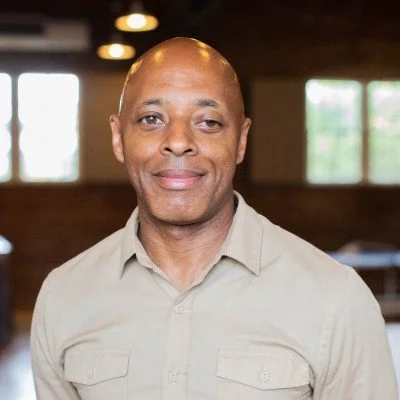
Andre Jones has spent decades investing in the Memphis neighborhood where he lives and works. A builder by trade, he grew up around construction; his father was a brick mason, and he and his brother eventually became general contractors building homes in the suburbs. But over time, Jones became increasingly interested in a different kind of development: smaller footprint, higher quality housing that could strengthen existing neighborhoods rather than expand outward.
His interest in this sort of development led him to an Incremental Development Alliance Boot Camp in 2015. By then, he had already begun exploring missing middle housing, inspired by cottage housing designed after Hurricane Katrina and intrigued by the potential of accessory dwelling units (ADUs). When Memphis adopted a new unified development code in 2011 that made ADUs legal again, Jones built the city's first ADU under the new rules. He would later go on to build the first fourplexes constructed in Memphis since World War II.
At the IncDev Boot Camp, one idea in particular reshaped how Jones thought about his work: creating more density under a single rooftop. Memphis, he realized, already had an extensive network of single-family neighborhoods. Rather than sprawling farther outward, the city needed more housing options within its existing footprint. Triplexes and fourplexes suddenly felt like practical, attainable tools for creating that gentle density.
The IncDev training also helped him move from ideas to implementation. One of the biggest hurdles for small developers, he found, is simply finding building plans that fit the context of the neighborhoods where they want to build. Through the Boot Camp, he was able to find plans that worked. He also refined the financial side of his projects, revising his development pro forma 30+ times before arriving at something that pencilled.
Jones also embraced the philosophy that small-scale development is built through persistence rather than certainty. As he puts it, entrepreneurship is inherently risky, but relying on a single source of income like a standard job is risky, too. Development, he believes, is a way to invest in both your future and your neighborhood.
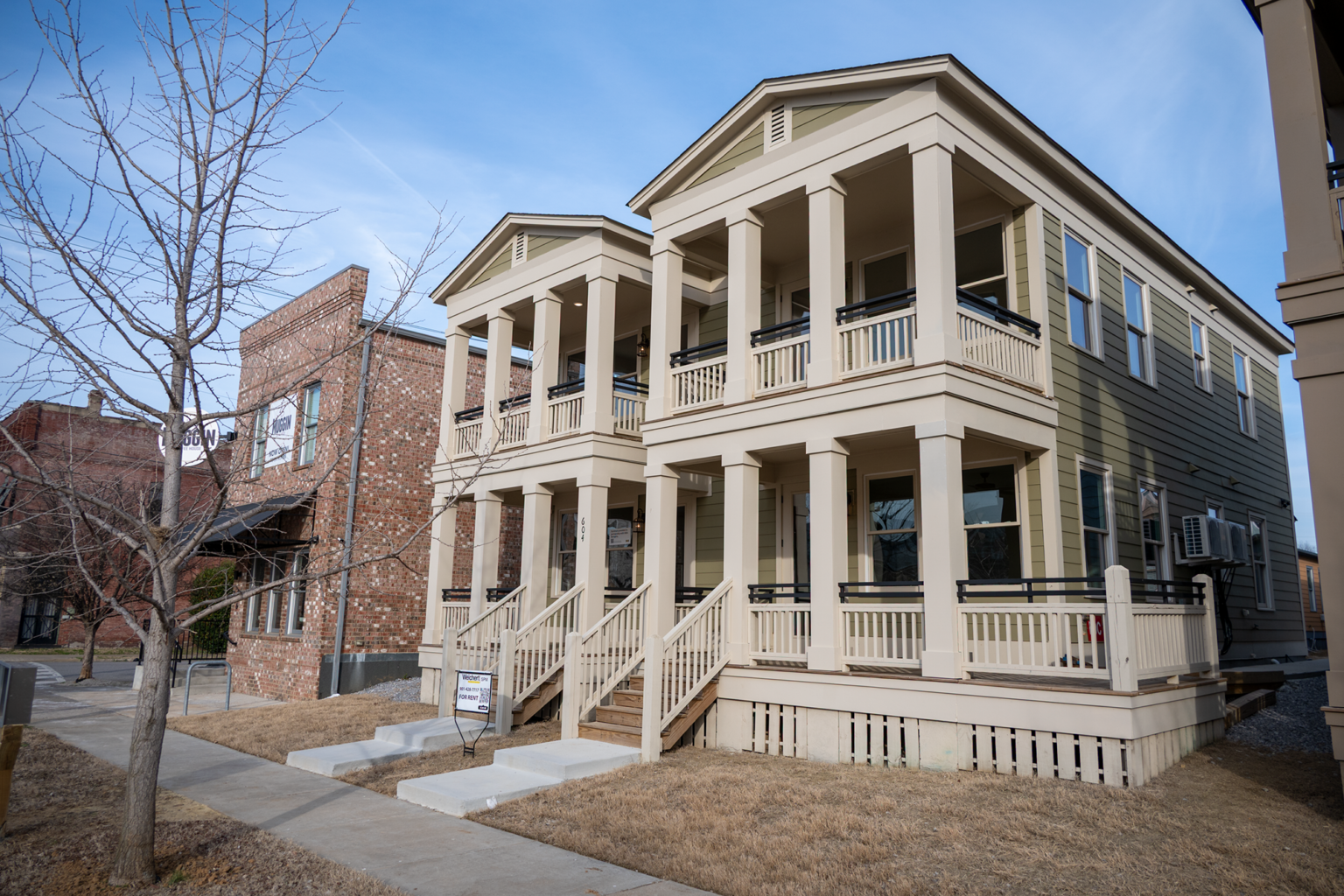
Some of the fourplexes in Malone Park Commons
That philosophy is on full display in Malone Park Commons, the project Jones is most proud of. [See a short video created by Hope Henchey for IncDev showcasing this project here.] Located in Memphis's historic Greenlaw Addition neighborhood, the site had once been part of a Hope VI redevelopment area. Much of the land had sat vacant for years after a community pool closed in the 1960s, eventually becoming a brownfield. Jones had lived and worked in the neighborhood for more than two decades before beginning construction around 2020.
Rather than attempting a massive development all at once, he built the neighborhood incrementally. "We started with the cottage court," Jones explains. "We saw the challenges we needed to come, stabilized, and did the live-work buildings, more challenges, finished those, stabilized. Fourplexes on this side, fourplexes on that side. So it worked out because building it all at one time, we wouldn't have had the money to do that, first off, and then who wants to sit on 35 empty units?"
The project was not without obstacles. Moving from single-family homes to small multifamily housing meant leaving the International Residential Code and entering the much more demanding International Building Code, requiring small triplexes and fourplexes to meet the same life-safety and structural standards as large apartment buildings. Even so, Jones refused to let those barriers stop the project. It ultimately took five years to complete the 35 units—an intentional pace that allowed each phase to stabilize before the next began.
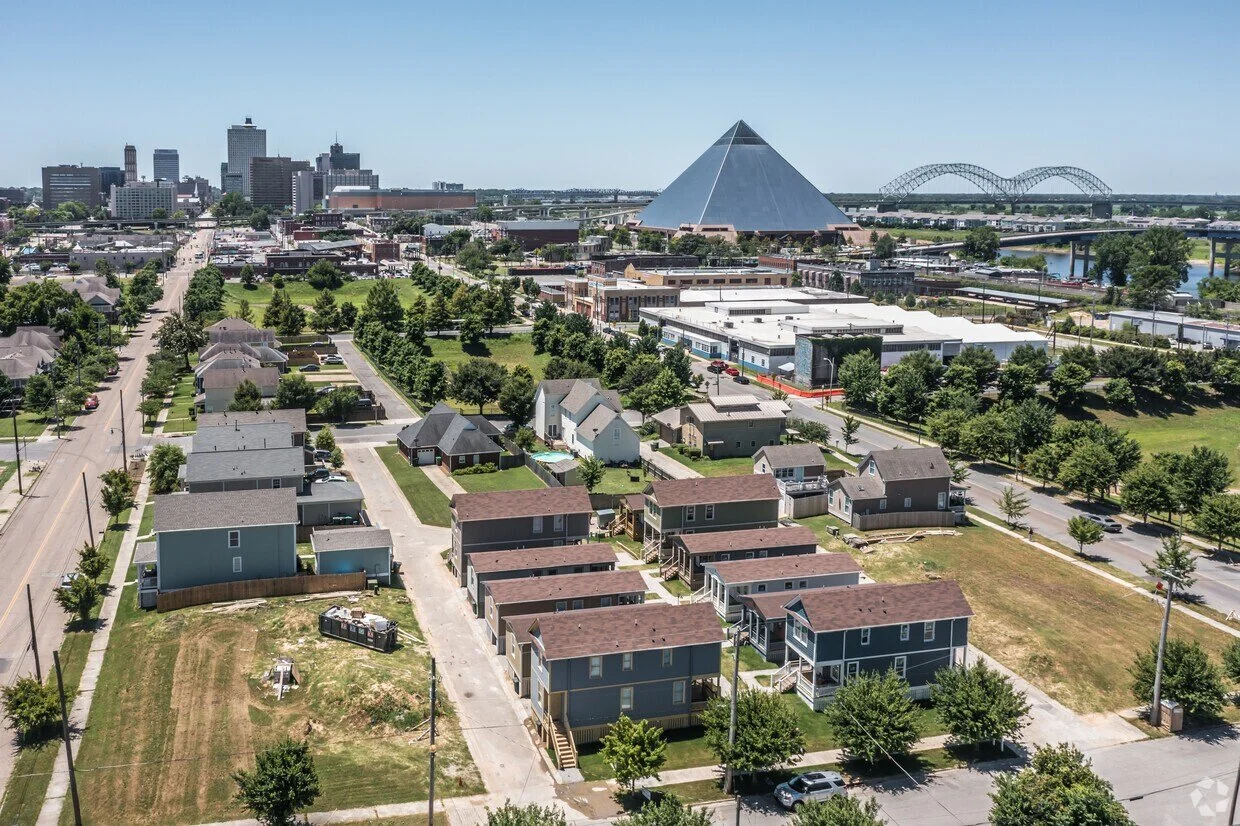
Aerial view of Malone Park Commons
Along the way, the project produced benefits far beyond the buildings themselves. Jones successfully demonstrated that quality housing could fit comfortably on much smaller lots than local regulations required. His work helped persuade the city to reduce its minimum lot size requirements, making it easier for future developers to build more housing. He also helped influence state and local building codes, creating a more economically feasible path for similar projects across Tennessee. “I think we've helped set the stage for future development here in the city and across the state,” says Jones.
Today, Malone Park Commons offers walkable housing alongside locally owned, minority-owned businesses, creating the kind of neighborhood Jones believes cities need more of. "You can't please everyone," he says, "but from a sustainable, resilient neighborhood perspective, I think we've done a good service here. […] The goal was to create a neighborhood that you would like to live in instead of trying to move somewhere else."
Jones sees his work as part of a much older tradition. He describes incremental development as the way cities have always grown: one building at a time, with each investment creating momentum for the next. "Incremental development is just building a community a piece at a time," he says. "It's built by many hands and in many increments." Looking ahead, he hopes to build more attainable homes for purchase, creating additional pathways to homeownership.

If you’d like to see Malone Park Commons for yourself and learn from Jones and fellow Memphis developers, join us for our National Field Trip to Memphis, September 24-26, 2026. Learn more and sign up here.
Thanks to video creator and storyteller Hope Henchey for the reporting for this article.