
Historic Preservation: It doesn't have to be a fight
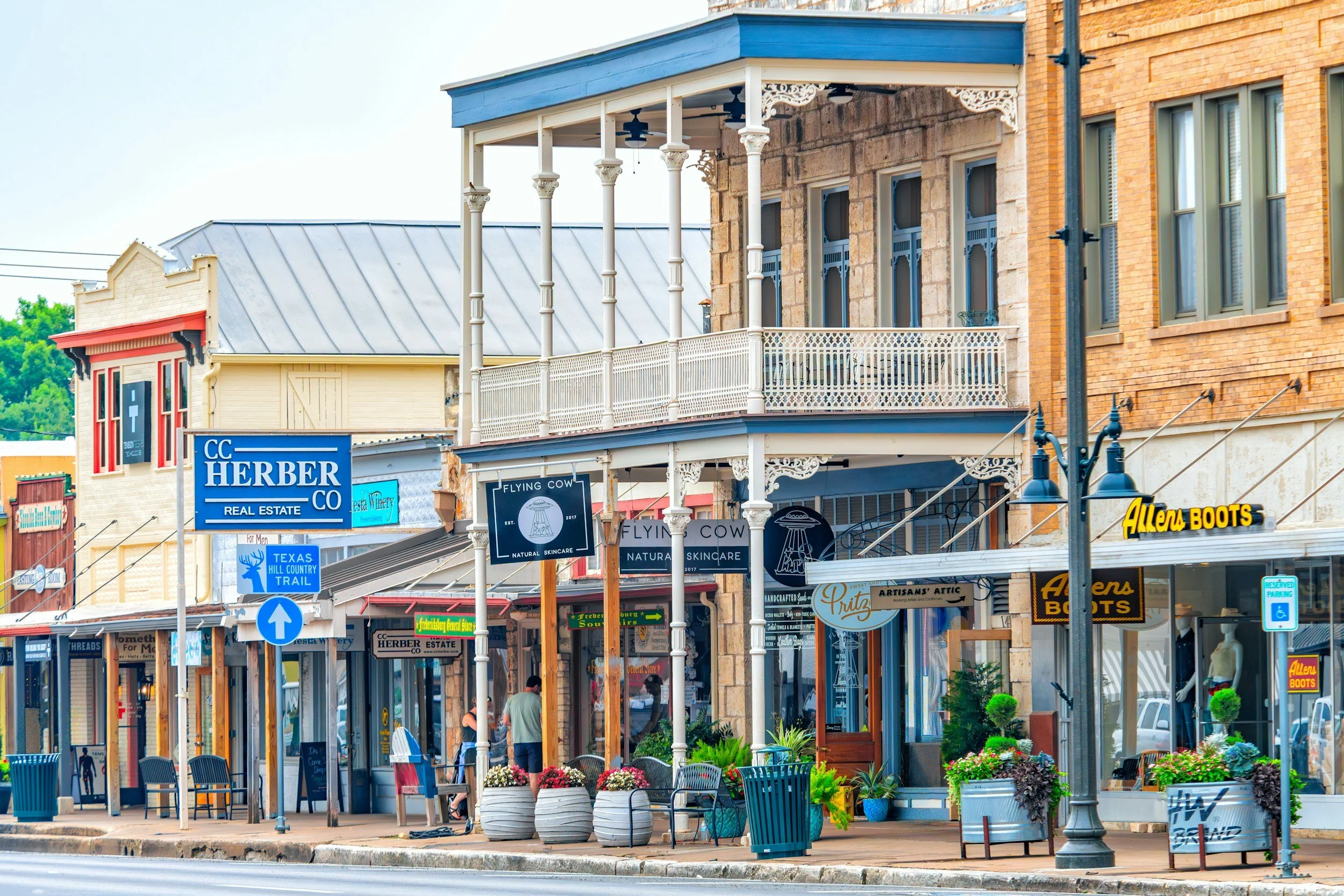
it’s possible to have historic preservation policies that allow communities to keep old buildings in productive service.
Historic preservation is often framed as a zero-sum battle between saving old buildings and allowing new growth. At IncDev, we believe it doesn’t have to be a fight at all. We believe it’s possible to have preservation policies that allow communities to keep old buildings in productive service while still allowing neighborhoods to adapt to meet the community’s needs.
Older buildings are one of the most important assets a community can have. They often sit in walkable locations on connected streets near existing infrastructure. They hold civic meaning for the community and are often better suited to repurposing than contemporary commercial formats, being frequently smaller and more flexible. A former storefront, warehouse, school, church, house, or upper-story office can easily become housing, small business space, or community venue.
Historic preservation matters not just for the real estate value of these buildings, but also because these buildings help form the public life of a place. Old commercial blocks, civic buildings and modest older homes carry the memory and character of a community, giving it an invaluable and irreplaceable sense of historicity, permeance and stability.
Historic buildings carry economic potential too. According to research from the National Trust for Historic Preservation, neighborhoods with a mix of older, smaller buildings tend to support greater economic, social and cultural vitality. That finding aligns closely with what we’ve seen: older buildings often provide the kinds of flexible, affordable, fine-grained spaces that small businesses, nonprofits, artists need.
Revitalizing these buildings are also excellent entry points for local developers who are just getting started. A small storefront with an apartment above, an old house converted to missing middle housing or a modest commercial building reused by a local business can be more accessible first projects than ground-up new construction. These projects are rarely glamorous, but they are exactly the kind of small, practical reinvestment that helps local residents build wealth and keep value circulating in the community.
So why is historic preservation so hotly debated? The issue is rarely about the value of old buildings or interest in putting them to productive use. The issue is often more connected to historic preservation processes and expensive modern code requirements. Strong Towns warns that many useful older buildings get trapped as a result: so old they should be treated with extreme caution (read: long processes) and also too old to be brought up to code. (Strong Towns Archive)
In many cases, preservation is used mainly as a tool to stop change, rather than to guide reinvestment. That can create a false choice: either freeze a place in amber or allow demolition and replacement with something worse. Our position is that communities need a third path: make preservation practical and flexible and connect it to local development capacity.
In short, we recommend that cities, whenever possible, make adaptive reuse easier to accomplish. Cities should allow upper-story housing, flexible mixed-use occupancy, small commercial spaces, live-work arrangements and context-sensitive infill. They should modernize codes and processes so older buildings can be safely reused without being subjected to impossible requirements. They should use tools like local historic districts, demolition delay, façade grants, tax credits, transfer of development rights, form-based codes, pattern books and preservation incentives carefully, with a focus on keeping buildings occupied and useful. The goal should be stewardship, not paralysis.
Historic preservation should also be connected to housing production. Many older buildings can support new homes through upper-story apartments, conversions, ADUs, cottage courts and missing middle retrofits. Preservation and housing abundance do not need to be enemies. A community can protect the buildings that define its character while also allowing gentle infill on vacant lots, underused parking areas and rear lots.
Historic preservation is strongest when it is local, practical, and future-oriented. Communities should preserve the buildings and patterns that give them identity, but they should also allow those places to evolve. A preserved building that sits vacant for decades is not a success. A successful preserved building is one that houses residents, supports a local business, contributes to the tax base and anchors public life.
The best preservation strategy asks the following questions:
What do we already have?
What buildings still have useful life?
What rules are preventing reuse?
Can local owners afford to repair and occupy these spaces?
Are we preserving only landmarks, or also the ordinary buildings that support local enterprise?
Are we allowing old buildings to adapt to new needs?
Are we pairing preservation with housing, small business support and Main Street revitalization?
Historic preservation is not about choosing the past over the future. It’s about carrying forward the places, buildings and development patterns that still have value. We believe preservation belongs at the center of incremental development because it starts with the most responsible development question a community can ask: how can we make better use of what we already have?
Additional Resources
National Trust for Historic Preservation — Older, Smaller, Better
Research on how older, smaller buildings support economic, social, and cultural vitality.
https://forum.savingplaces.org/viewdocument/older-smaller-betterEPA — Smart Growth and Preservation of Existing and Historic Buildings
Strong federal resource on adaptive reuse, preservation, redevelopment, and maintaining local character.
https://www.epa.gov/smartgrowth/smart-growth-and-preservation-existing-and-historic-buildingsNational Trust for Historic Preservation — Making the Case for Adaptive Reuse
A practical preservation argument for reusing existing buildings to expand housing options and support community vitality.
https://savingplaces.org/stories/making-the-case-for-adaptive-reuseStrong Towns — Historic Preservation
Useful Strong Towns critique of preservation systems that make reuse too difficult and trap older buildings between costly requirements and designation processes.
https://archive.strongtowns.org/journal/2014/6/23/historic-preservation.htmlStrong Towns — Historic Preservation: Treating the Symptom Instead of the Cause
A helpful argument that preservation often responds to bad replacement development and that communities should also reform the rules producing poor outcomes.
https://archive.strongtowns.org/journal/2017/1/30/historical-preservationCNU — Charter of the New Urbanism
Foundational New Urbanist statement on respecting historical patterns while strengthening neighborhoods, districts, corridors, and public life.
https://www.cnu.org/who-we-are/charter-new-urbanism