
Parking Reform - and Why it Matters for Creating More Housing in Your City
Parking reform—changing the laws that control how much parking is required in a city and where—is one of the most practical and overlooked ways to make incremental development possible. Parking rules shape what gets built, where it gets built, how much it costs, whether older buildings can be reused, and whether small local developers can participate. In many communities, zoning may technically allow ADUs, missing middle housing, or adaptive reuse of historic buildings, but parking requirements quietly make those projects impossible.
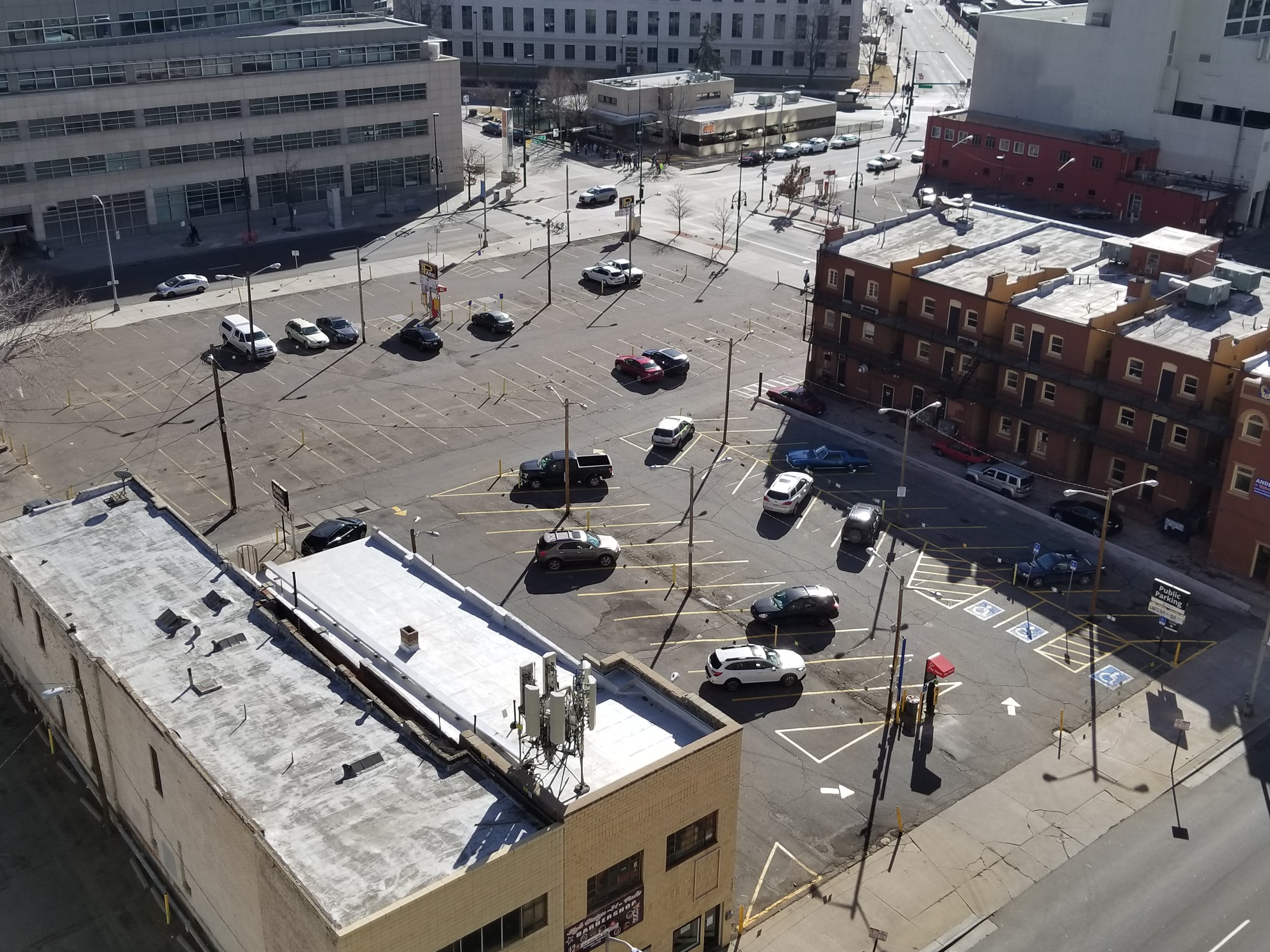
Something is wrong if your downtown looks like this. That’s valuable land sitting mostly vacant, that could be space for homes, businesses or parkland.
At the Incremental Development Alliance, we believe communities should stop using one-size-fits-all parking mandates and instead allow parking decisions to be right-sized to the project, the site, and the neighborhood context. Eliminating or reducing minimum parking requirements does not mean eliminating parking. It means no longer forcing every home, storefront, restaurant, or office to provide a predetermined number of off-street spaces regardless of actual need, cost, walkability, transit access, shared parking opportunities, or local market conditions.
Required parking is expensive, land-intensive, and often hostile to the kinds of places communities say they want. A small apartment building may be physically possible on a lot until the code requires too many parking spaces. A historic building may be impossible to reuse because it cannot create new off-street parking without demolishing the very fabric that makes the place valuable. In town after town, we’ve seen how removing parking minimums allows for more homes and businesses to grow and flourish.
Parking mandates are also not just a private development problem; they are a public finance problem. Our friends at Strong Towns argue that parking mandates cost cities money by pushing destinations farther apart, creating more streets and roads per capita, increasing stormwater runoff, and adding liabilities to public balance sheets. When land that could support homes, businesses, tax base, or public life is instead required to sit as asphalt, the community pays twice: once in lost development productivity and again in long-term infrastructure and maintenance costs.
Parking reform is especially important for small-scale development because small projects have less margin for regulatory error. A large developer may be able to absorb structured parking costs, negotiate variances, or hire consultants. A homeowner adding an ADU, a local builder converting a house into a duplex, or a small entrepreneur opening a corner storefront often cannot. Parking mandates therefore function as a hidden tax on the exact projects communities need more of: small, local, infill, mixed-use, adaptive reuse, and missing middle development.
Bottom line: We still, of course, need parking. The question is whether parking should be required by blunt formulas or managed as a local resource. Better tools include eliminating minimum parking requirements, allowing shared parking, pricing high-demand curb parking, improving walking and biking connections, and allowing property owners to provide the amount of parking their project actually needs.
The best parking policy asks practical questions. Is this project near existing public parking, shared lots, transit, trails, or walkable destinations? Can parking be shared between uses with different peak times? Are we requiring parking that will make reuse impossible? Are we forcing small projects to overbuild asphalt while claiming to support housing and Main Street? Are we managing curb space, or simply requiring private lots and hoping the public realm works itself out?
A community that wants more homes, stronger Main Streets, adaptive reuse, lower development costs, and more local builders should begin by asking a simple question: Are our parking rules helping us build the place we say we want, or are they quietly preventing it?
Additional Resources
Parking Reform Network — Parking Reform Policy Cookbook
A practical policy resource for communities looking to reduce or eliminate parking mandates and build support for reform.
https://parkingreform.org/resources/cookbook/Parking Reform Network — Parking Reform Map
A useful national map of communities that have reduced or eliminated parking mandates.
https://parkingreform.org/resources/mandates-map/Strong Towns — Parking
Strong Towns’ core resource on why parking mandates cost cities money, spread destinations apart, and create long-term public liabilities.
https://www.strongtowns.org/parkingCNU — Citywide Parking Reform Enables Reuse of Vacant Buildings
A highly relevant Fayetteville, Arkansas example showing how removing commercial parking requirements helped unlock adaptive reuse.
https://www.cnu.org/publicsquare/2022/12/16/citywide-parking-reform-enables-reuse-vacant-buildings