
Alumni Story: Seth Harkins

Seth Harkins
Seth Harkins didn’t start out in real estate development. With an undergraduate degree in mechanical engineering, he instead became a math teacher at a school serving many low-income families. There, he saw firsthand how narrow the margins could be around both housing and workforce opportunities.
In 2016, Seth began working with Alcy Ball Development Corporation, a nonprofit focused on the Alcy Ball neighborhood in Memphis. By 2019, the organization had started buying property in the neighborhood. They didn’t know much about real estate development yet, but Seth sensed there was an opportunity to use property ownership as another tool for serving the community—and he wanted to learn more.
That led him to an Incremental Development Alliance Boot Camp. Seth was looking for real estate knowledge, but also for critical feedback and connections with people who understood the work. One idea from the training particularly stuck with him: “You can own something today that’s not in its final form.”
For Seth, that idea opened up a different way of thinking about development. A property didn’t need to begin with a fully formed vision. It was possible to own something, learn from it, and make gradual changes over time.
Another boost came when the opportunity arose for Alcy Ball to become a Certified Housing Development Organization. Seth and his team applied, encouraged by people around them who saw the opportunity clearly. As Seth put it, “Having people that are willing to say, hey, you’d be stupid not to do this” helped give them confidence to move forward.
IncDev also helped Seth get more comfortable with the financial side of mission-driven development. As a nonprofit developer, success didn’t necessarily mean that every project would turn a profit. Instead, Seth needed to understand the size of the gap: “I know this project is going to lose money. I need to know how much money it’s going to lose. Do I need to raise $1,000 or do I need to raise $100,000?”
Learning to answer those questions also helped him explain projects to people outside the real estate world, giving potential donors and lenders a clearer understanding of what Alcy Ball was trying to accomplish and what it would take to make a project happen.
One of their first projects was the Alcy Ball Development Corporation office, a building that quickly became much more than an office space. The team jokingly calls it the “Alcy Ball Senior Center.” They host classes, Coffee & Crafts, and other activities there, creating a third space where neighbors can gather.
Their housing projects have become another way to build relationships. Seth recalls one duplex that sat empty for a long time and had become a source of frustration for neighbors. Eventually, those same neighbors told the property owner: Hey, you need to go talk to Alcy Ball. They can help you fix this. For Seth, seeing residents advocate for Alcy Ball was a meaningful sign of the trust the organization had built.
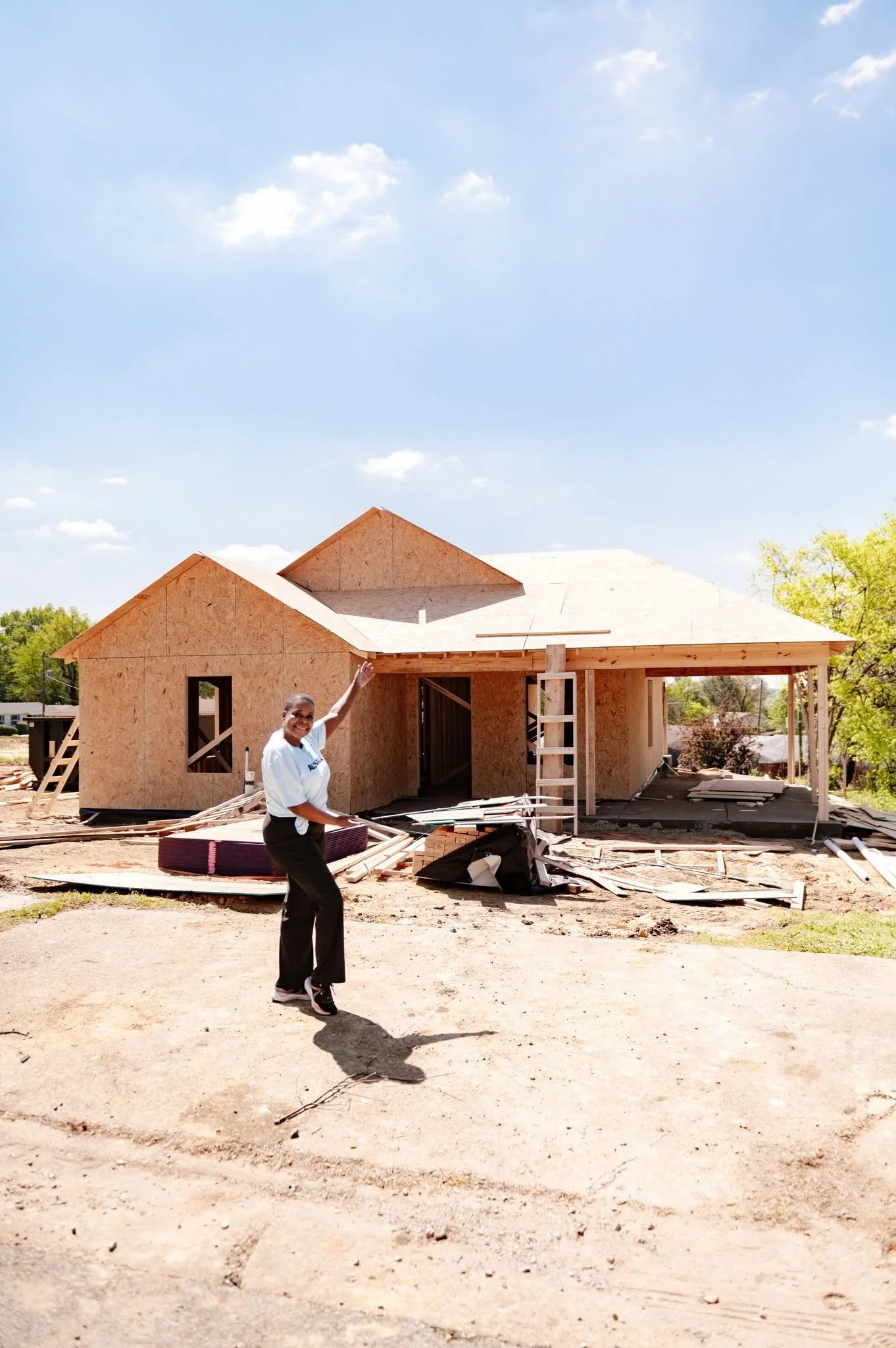
That trust wasn’t automatic. When Alcy Ball began building homes, some neighbors initially opposed the work based on misconceptions about what was being proposed. But when the organization held an open house at its first new home and people could see the project for themselves, perspectives began to change. Seth describes the initial resistance as “an imagination problem.” Once people could see what was possible, it became easier to imagine what thoughtful development could mean for their neighborhood.
The work still comes with challenges. Relationships with rehabilitation contractors can be difficult, and Alcy Ball has deliberately kept rents low across its small rental portfolio, which makes meeting the bottom line tough. At the time of the interview, the organization had four rentals, and it was putting $200 each month into savings for tenants to use when they were ready to purchase a home.
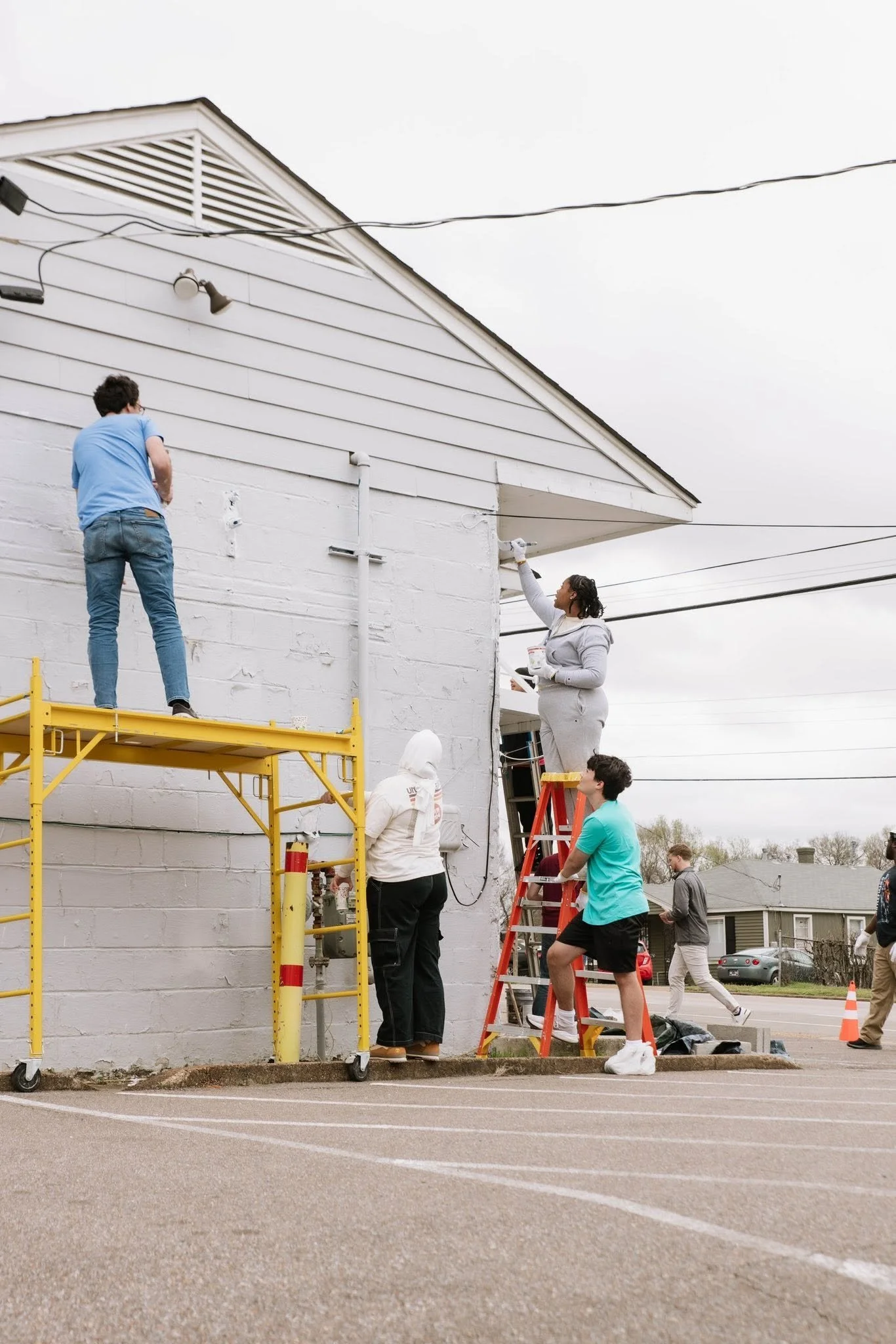
But on the bright side, the community’s support has become increasingly visible. Neighbors show up for block parties, financial literacy classes, Coffee & Crafts, and events centered around Alcy Ball’s party trailer. On one occasion, Seth and his team went downtown to speak to the control board and 25 community members came with them. The neighbors arrived wearing homemade “Let Us Build” shirts—something Seth hadn’t asked them to do. For him, it was a powerful demonstration that residents saw Alcy Ball’s work as their work, too.
As Seth has gained experience, the technical side of development has become less intimidating. He has become more precise and efficient at estimating project costs, reminding himself that “these are all findable numbers.” That knowledge has made it easier to assess risk and predict what might happen before a project begins.
Alcy Ball is now working on rental housing for seniors and is interested in eventually bringing amenities such as nicer retail or a food truck park to the neighborhood. Seth’s own relationship with development has changed, too. Early on, projects could keep him awake at night and dominate conversations with his wife. Now, the uncertainty feels more manageable. “It’s gotten a lot easier to de-risk and sort of predict what’s going to happen,” he says.
That experience shapes Seth’s advice to other aspiring incremental developers: these skills are teachable. Development may initially feel complicated or intimidating, but the numbers can be found, the risks can be better understood, and experience makes the process easier. For Seth, learning those skills has given Alcy Ball Development Corporation another way to invest in its neighborhood—one property, one relationship, and one project at a time.
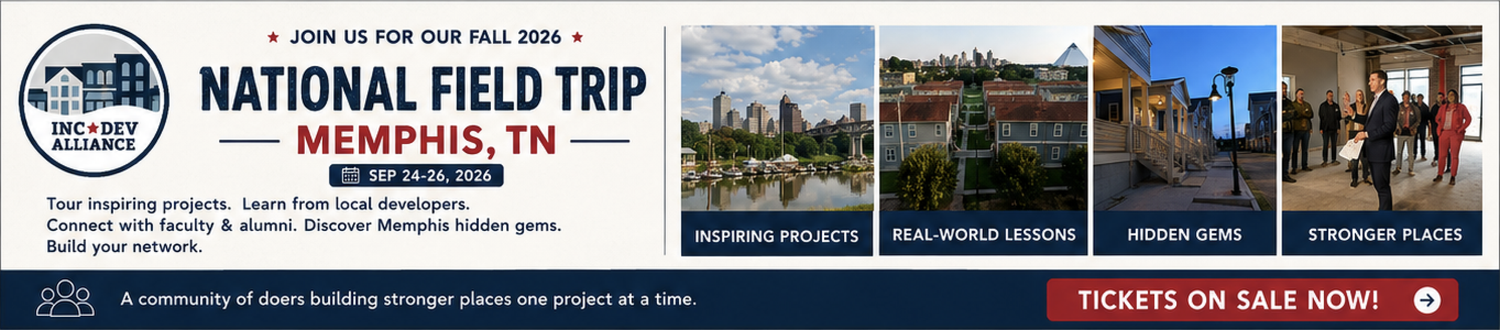
Want to see more innovative projects and meet developers like Seth who are shaping the future of Memphis? Join us for our National Field Trip to Memphis, September 24-26, 2026. Learn more and sign up here.
All photos from the Alcy Ball Development Corporation Facebook page.
Thanks to video creator and storyteller Hope Henchey for the reporting for this article.