
Alumni Story: Eddie and Teri Coates
For Eddie and Teri Coates, development doesn’t start with a building type or a business plan. It starts with a place. Eddie describes two different kinds of developers. Some perfect a business plan and then search for sites where they can replicate it. Others start with a property that intrigues them and say, “I’m willing to do anything. I think that’s a really cool property…so I’m going to figure out the business plan to fit that property.”


That second approach is what drew Eddie and Teri to incremental development—and it’s increasingly how they’re approaching their own work in downtown Edmond, Oklahoma where they lead the firm CANVAS Architecture and Development.
Both came to development with experiences that shaped how they thought about place. Eddie grew up in a small town where there wasn’t a lot happening. He received good training at an initial real estate job, but it didn’t fully equip him to become a developer, so he began teaching himself financial modeling from books.
Meanwhile, Teri’s background is in architecture. She saw an opportunity for architects to bring their training into development because they’re taught “not just to design the building, but to think about the context of where that building sits and how it relates to the neighborhood and the community around it.”
Their interest in better development grew while they were living in an RV together and traveling around the country. Seeing different cities also meant seeing how often development failed to respond thoughtfully to the places around it. For Teri, “it really just lit a fire under me, even though my academic studies and focus has been architecture.”
Turning that interest into actual development, however, proved difficult. One of Eddie and Teri’s first efforts never came together. Along with a partner, they spent roughly $60,000 to $70,000 trying to make a development project happen, including paying engineers and architects. In the end, the project went nowhere. But that experience didn’t make Eddie lose interest. Quite the opposite. “I was just smitten with development,” says Eddie.
He couldn’t stop reading case studies and eventually felt that he simply had to try something. For Teri, the motivation was also about having a greater say in what gets built. She wanted to be part of the decision-making process so she could have a positive impact on her community.
Both had already been involved with professional organizations—Teri through AIA and Eddie through ULI—but when they became members of the Incremental Development Alliance and attended member trainings, something felt different. IncDev felt more “real and accessible” in the way the information and community were structured.
Eddie also recognized in IncDev the kind of developer he wanted to become: someone willing to start with a particular property, understand its context, and then figure out what makes sense there rather than forcing a predetermined model onto it.
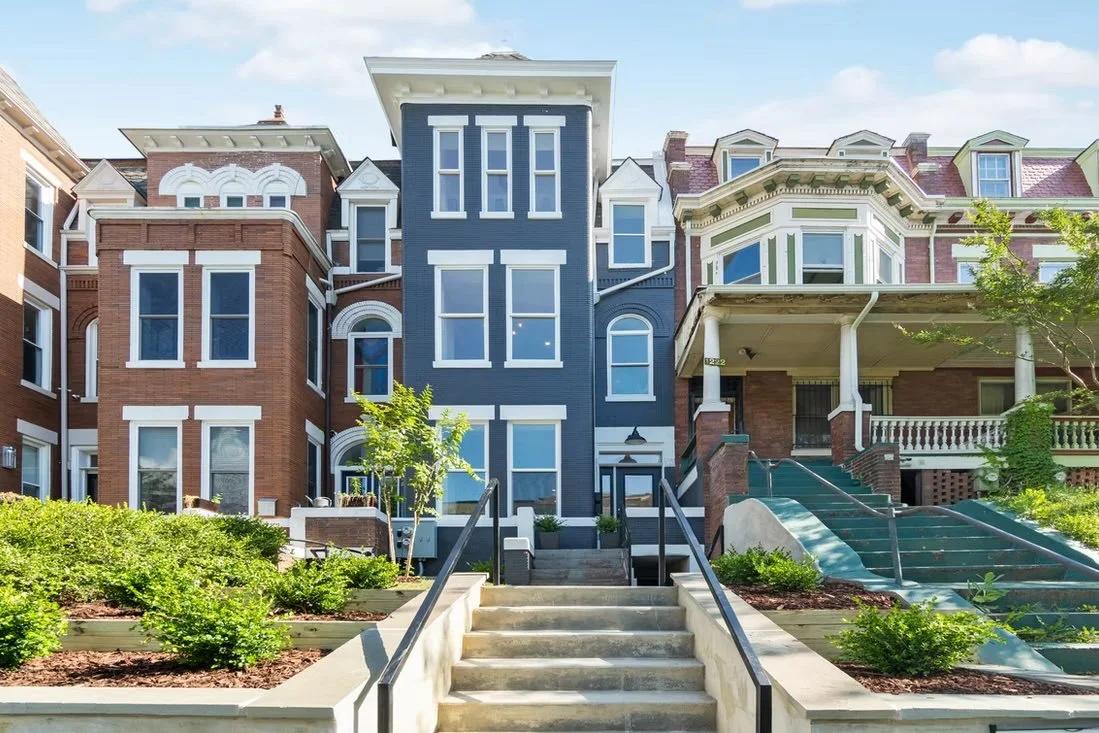
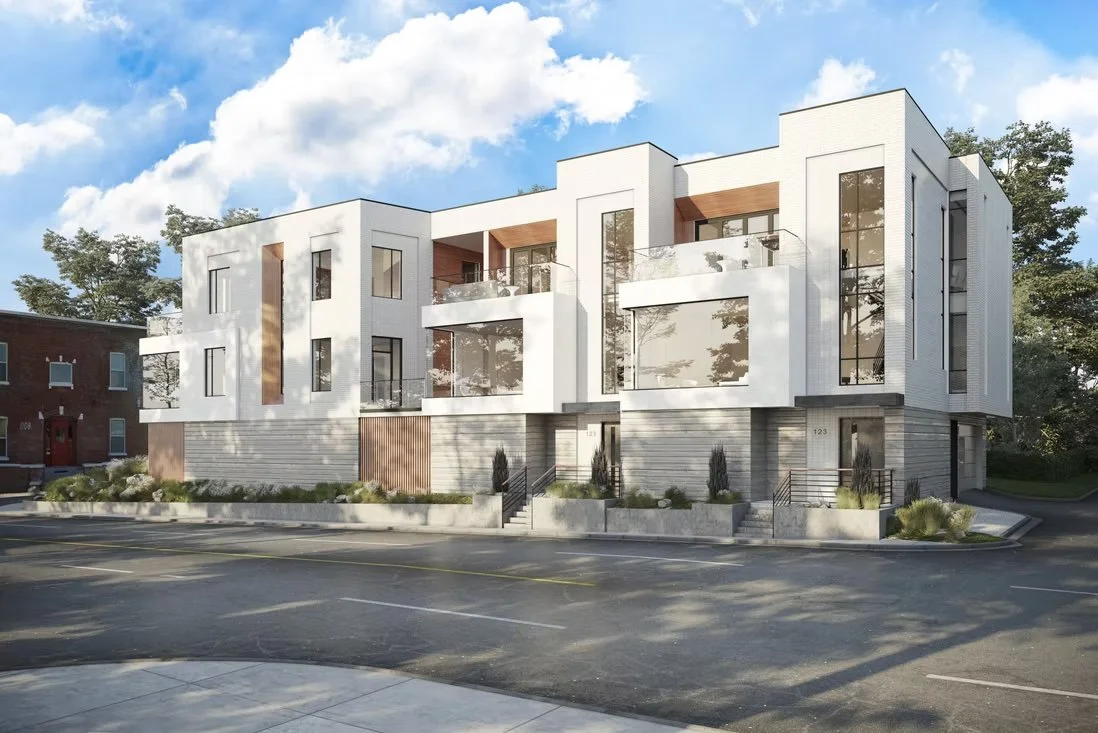
Above: Recent and future projects by CANVAS
Now Eddie and Teri are putting that philosophy to work in downtown Edmond. One of their projects began with three houses within walking distance of downtown. The homes are currently unlivable and boarded up. Eddie and Teri plan to transform the property into 34 homes, creating a mix that includes live-work units along the street, individual rental townhomes, garage apartments, and other housing.
Their largest project is also near downtown and operates at a very different scale. Plans call for approximately 100 apartment units, a 40,000- to 50,000-square-foot office building, and a new downtown YMCA. But some of the project's most interesting elements are happening at a much smaller scale. Eddie and Teri and their partner own the entire alley on the site, giving them an opportunity to rethink what an alley can be. Their plan is to put utilities underground and turn the alley into a pedestrian-focused space lined with micro-retail—approximately 500-square-foot turnkey spaces that could create opportunities for small businesses. Cars will still be able to move through, but the alley will be understood primarily as a pedestrian space.
Getting projects like these off the ground comes with substantial obstacles, particularly around funding. For the larger downtown project, the team had to secure a TIF. They’re also working within the unusual financial structure of Oklahoma municipalities, where cities rely heavily on sales taxes rather than property taxes. That can create tension around development because new housing also means new residents who will require municipal services.
Most of Eddie and Teri’s downtown projects are still works in progress; much of their impact remains anticipated rather than realized. But they believe that impact could be substantial. If the projects come to completion, they envision a downtown that feels very different five years from now: more lively, with more people living and spending time there.
“We are all in on downtown Edmond," they said.
For Eddie, that commitment gets at what makes the IncDev approach to development compelling in the first place. He imagines someone looking at an old gas station in their own neighborhood and asking what else it could become. Because that person lives there and understands the neighborhood, they can bring creativity and local knowledge to the problem rather than simply replicating a development model from somewhere else.
“To me, that’s what’s really interesting about real estate, and that’s what we’re trying to do,” says Eddie.
📓 Want to plug into the trainings that have helped Eddie and Teri kickstart their work? Check out our upcoming training calendar and consider becoming a member to get access to tailored resources and webinars just for developers and advocates.
Thanks to video creator and storyteller Hope Henchey for the reporting for this article.