
Alumni Story: Will Hanrahan
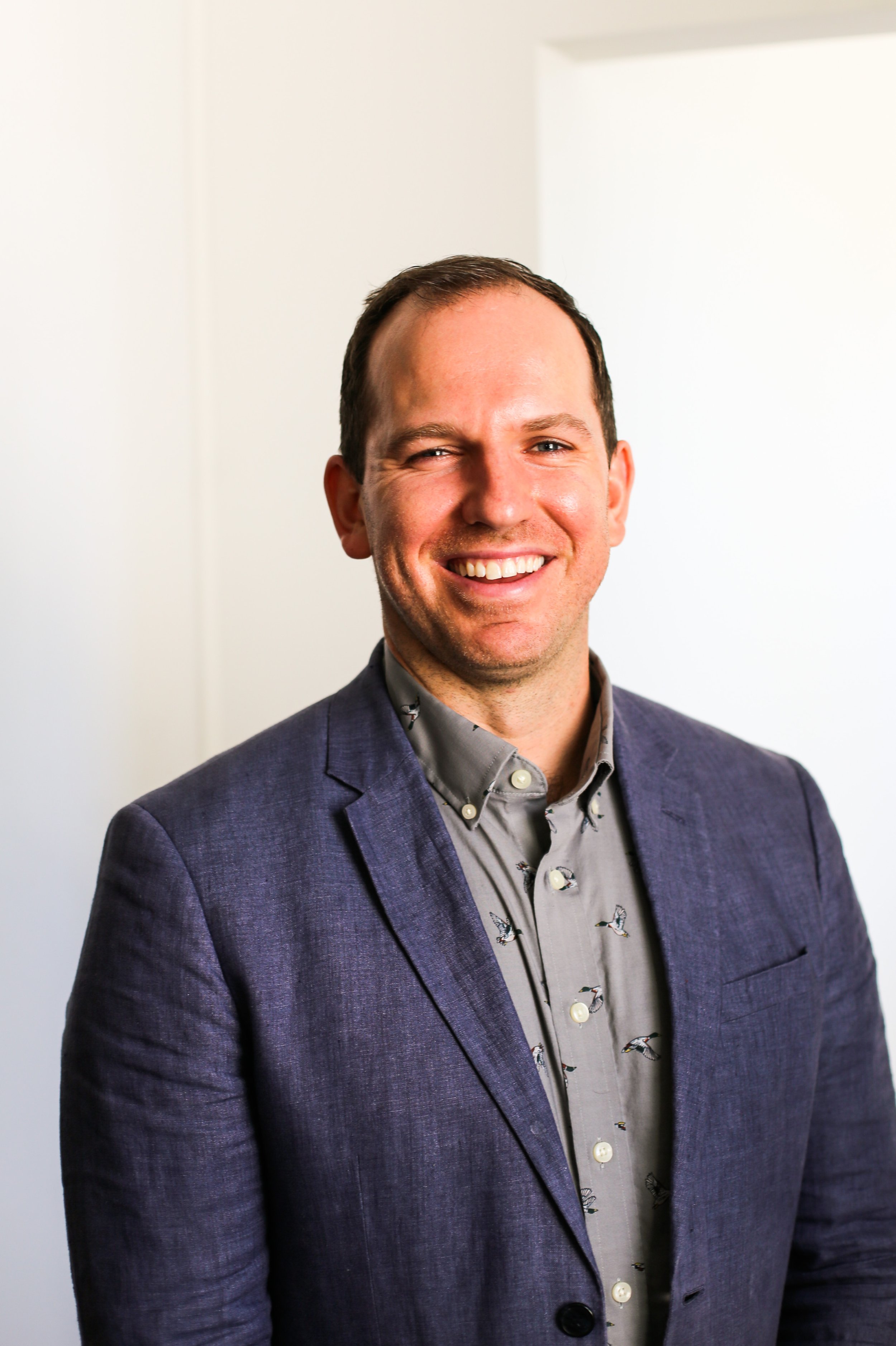
When he bought a vacant industrial property in Lexington, Kentucky, in 2023, Will Hanrahan didn’t yet know exactly what it would become. He had never completed a ground-up development project, there weren’t many recent local examples of what he was considering, and he didn’t have a network of people in Lexington who had done something similar.
Today, that site is becoming The Railyard, a $7.5 million mixed-income, mixed-use infill development with 32 apartments and 3,000 square feet of neighborhood commercial space.
The journey from one to the other began with a desire to do work that felt more meaningful.
Growing up in Nottinghamshire, England, Will completed a master’s degree in marketing and strategy at the University of Warwick in 2010 before moving to the United States later that year and settling in Lexington in 2012. Most of his career was spent in marketing roles, although he began investing in and managing residential rental properties in Lexington in 2014.
“I never set out to become a developer, but I reached a point where I wanted my work to have more meaning and a tangible impact in my community," says Will. "Development offered a way to make a lasting contribution, particularly by adding housing when Lexington faces a significant shortage.”
That desire eventually led him to the Delaware Avenue property that would become The Railyard. He acquired the site in December 2023 without a clear idea of what could realistically be built there or how someone with no previous ground-up development experience could make it happen.
“I realized that to make this project happen, I needed to immerse myself in the development world and find practical guidance on how someone becomes a developer," says Will.
There were few recent local examples of the type of project he was imagining: a three-story walk-up development combining housing with neighborhood commercial space. As a new developer, he also lacked a local network of people who had completed comparable projects and could tell him what they had learned.
So, in May 2024, Will attended the IncDev Small Scale Developer Workshop in Cincinnati, OH. “Being there showed me that many of us were working through the same issues," Will explains. "Even without a local group pursuing these projects, it was reassuring to know I was not the only one. It felt like I had found my people.”
The technical information was valuable, but just as important was learning to see development as a series of connected decisions—and realizing that he didn’t have to know how to solve every one of them on his own.
The Delaware Avenue property has an industrial history stretching back to at least 1934. Several rail spurs once crossed portions of the site and served its former industrial uses, eventually inspiring the project’s name. The property had been vacant since approximately 2021. Because of potential environmental concerns, the site entered Kentucky’s Brownfield Redevelopment Program. The project completed Phase I and Phase II environmental assessments and removed an underground storage tank.
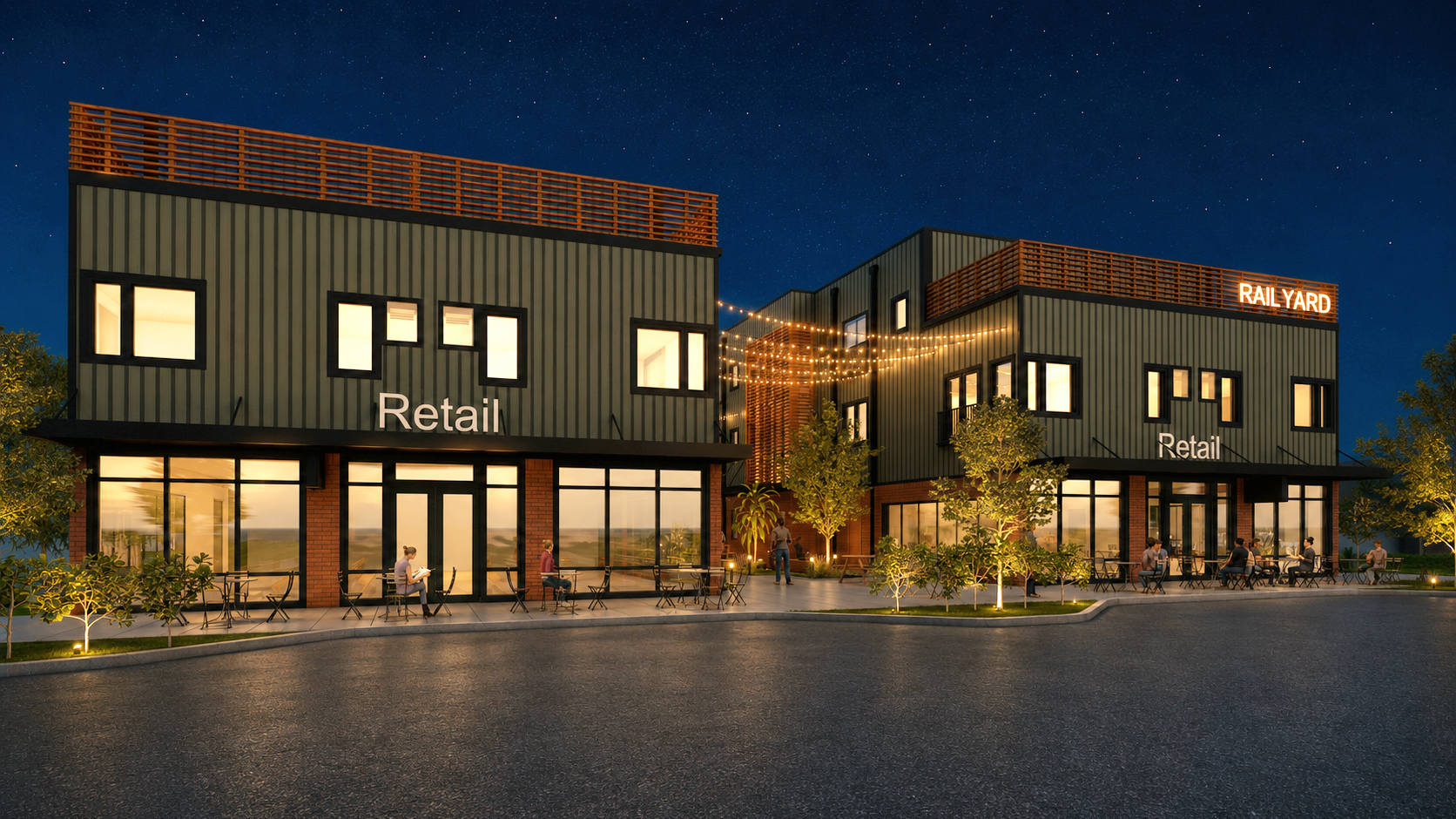
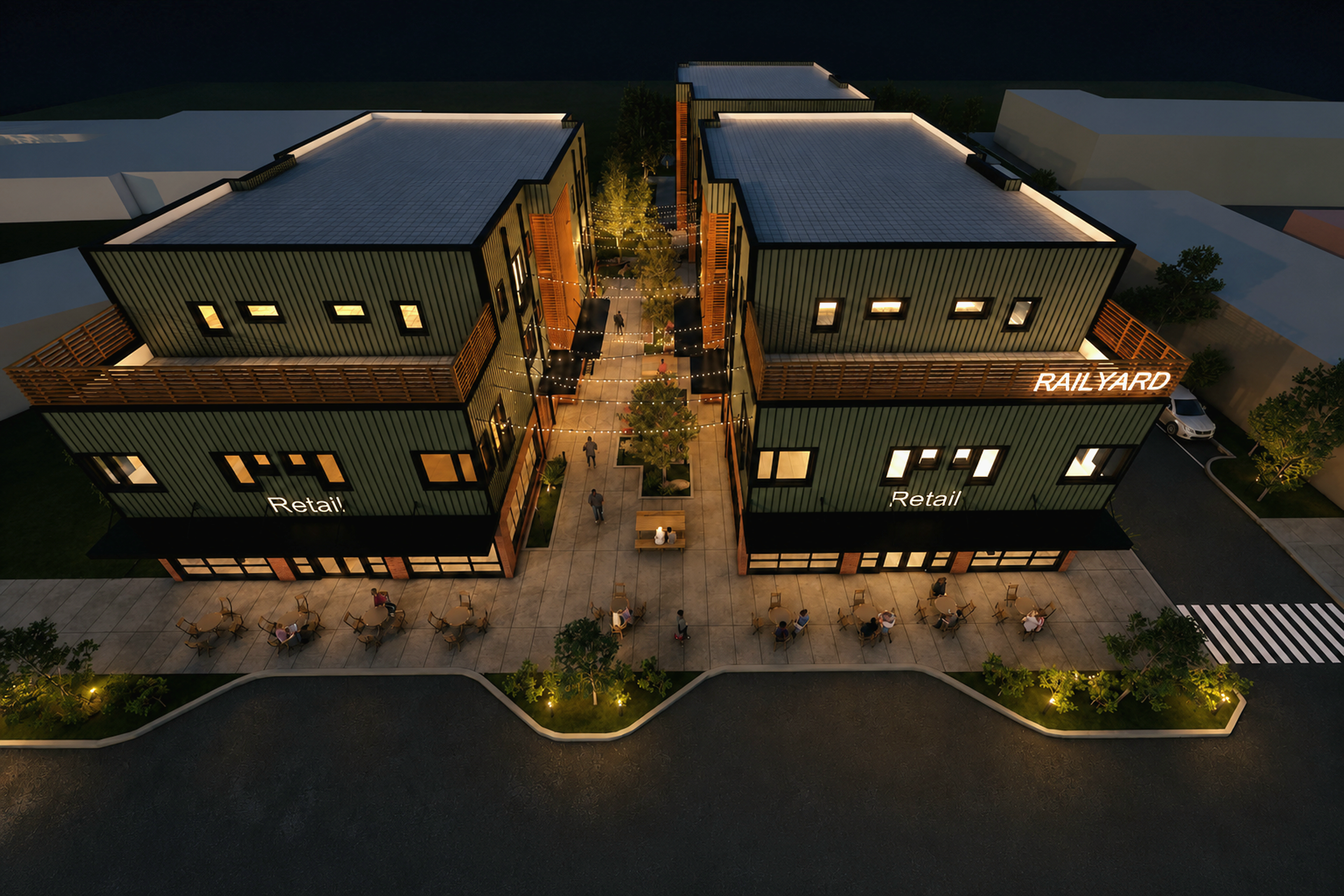
The plan that ultimately emerged calls for three buildings containing 32 apartments and 3,000 square feet of neighborhood commercial space (see renderings above). Twelve of the apartments will be income-restricted for 20 years to households earning up to 80 percent of Area Median Income. The commercial portion can operate as two spaces of approximately 1,500 square feet each or be divided into four smaller suites, with interest so far from businesses including a brewery taproom, neighborhood market, yoga studio, and bakery and coffee shop.
Turning that plan into a viable project required exactly the kind of network Will had been missing when he started: “The most important resource has been a network of people willing to share their expertise and take me seriously as a first-time developer.”
With no clear local roadmap, he built that network himself: asking questions, seeking introductions, and gradually finding advisers, investors, public officials, lenders, designers, engineers, contractors, and advocates who could help move the project forward.
Early on, he contacted R. John Anderson and brought him onto the project as a consultant so he would have someone experienced in incremental development to whom he could ask direct questions. Anderson’s focus on simple, buildable three-story walk-up buildings and cost-conscious design helped shape the planning and code strategy. Local architect and urban designer Michael Huston contributed extensive urban-design and planning experience to the site layout, massing, architectural character, and relationship between the buildings and the street.
The network grew beyond the immediate project team. Lexington planners, housing officials, economic-development staff, engineers, and councilmembers helped navigate local programs and requirements. The city ultimately committed $1 million through its Affordable Housing Fund, making the 12 income-restricted apartments financially viable. Without that support, the development may not have proceeded.
Kentucky’s Brownfield Redevelopment Program and its environmental partners helped the team understand and address the site’s environmental conditions, while Fahe committed construction and permanent financing.
That patchwork of partnerships was necessary because one of The Railyard’s biggest challenges has been making a relatively small mixed-use project financially feasible amid higher construction costs and interest rates. Conventional financing alone could not support the project while also providing income-restricted housing.
By combining Lexington’s affordable housing, public-infrastructure, and stormwater programs with private investment and Fahe’s financing, Will was able to move toward closing the financing gap. At the same time, the project team was navigating environmental and geotechnical complications, utilities, easements, permits, building-code requirements, and the added complexity of constructing three separate buildings.
The project thankfully received unanimous Planning Commission approval and generally strong community support. At the groundbreaking, Kentucky’s lieutenant governor joined Lexington’s mayor and vice mayor, councilmembers, and housing and economic-development leaders. Their participation reflected the attention the project has received as an example of infill development, workforce housing, brownfield redevelopment, and neighborhood-scale commercial space.
“IncDev showed me that I did not have to figure everything out alone. It helped me view development as a series of difficult but solvable decisions and gave me a community of people working through similar challenges.”
But one of the most encouraging outcomes has been more personal: other people in Lexington have started approaching Will because they are interested in attempting projects of their own.
He has begun hosting site visits and openly sharing The Railyard’s financing, design decisions, challenges, mistakes, and lessons. The first-time developer who initially struggled to find local people with relevant experience is now becoming a resource for the next person asking those same questions.
IncDev helped make that transition possible. “IncDev showed me that I did not have to figure everything out alone," says Will. "It helped me view development as a series of difficult but solvable decisions and gave me a community of people working through similar challenges.”
Will's immediate goal is straightforward: finish The Railyard (he's targetting spring 2027 for completion), lease the apartments, bring strong local businesses into the commercial spaces, and operate it as a durable, well-managed community.
But he also hopes the project can become something bigger than one development.
Lexington needs more housing while also valuing its farmland and managing growth through its Urban Service Area. For Will, small infill projects on underused properties offer one way to respond—adding housing and supporting local businesses while making better use of infrastructure that already exists.
The Railyard is his first ground-up project, but he hopes it won’t be the end of the story. He is open to leading another development, partnering with others, consulting, or joining a development group where he can apply what he has learned and continue building a career in development. Most of all, he hopes The Railyard can serve as a practical proof of concept for other people wondering whether they, too, could take on a small infill project: “If The Railyard encourages other property owners, homebuilders, professionals, or first-time developers to pursue similar projects, its impact can extend well beyond this one-acre site.”
📋 Interested in training that can help you kickstart a project in your community, like Will’s? Explore our upcoming workshops and boot camps.
The above essay is based on an extended interview written by Will.