
Alumni Story: Stephanie Wade-Armando
Stephanie Wade-Armando came to real estate development drawn by a desire to create lasting change. After serving with the Peace Corps in Guatemala, she returned to Memphis and worked in a variety of housing programs across the nonprofit, for-profit, and federal sectors. Much of that work centered on crisis management and helping people in need find housing. While meaningful, it also left her wanting to be involved earlier in the process—to help create the buildings themselves.
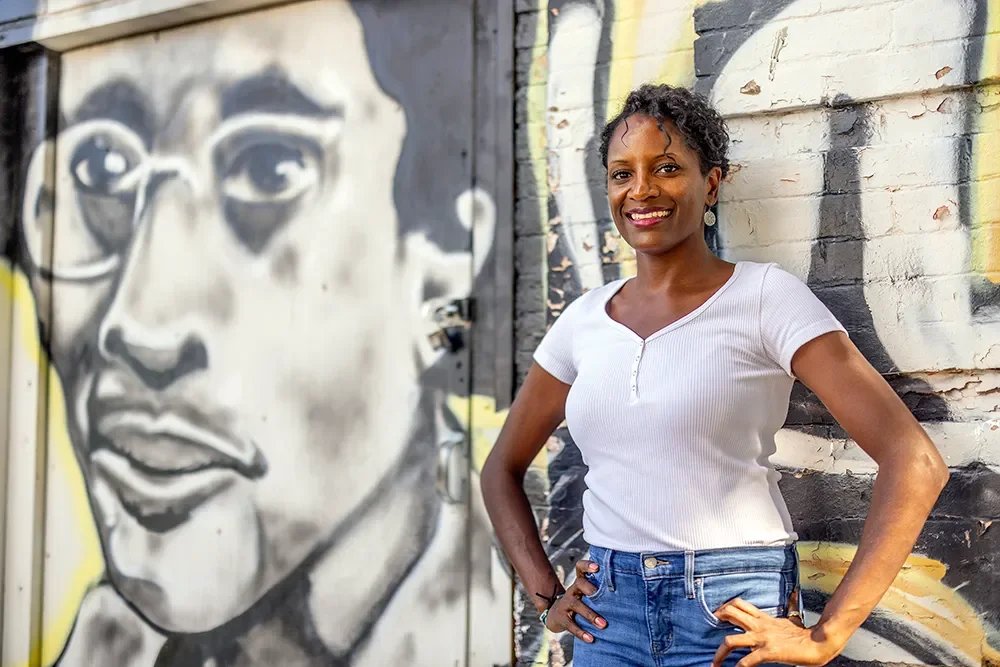
A mission-oriented person by nature, Wade-Armando became interested in development because it offered the opportunity to create something tangible that would serve communities for generations. When she encountered an opportunity to attend an Incremental Development Alliance training in partnership with the Memphis Medical District Collaborative for emerging developers, she saw it as the first step toward making that vision a reality.
The training transformed what had once felt like an intimidating profession into something accessible. By breaking the development process into clear, manageable stages, it showed that someone with little or no prior development experience could learn how to bring a project to life. Rather than viewing development as something reserved for large firms or seasoned professionals, Wade-Armando came away understanding that it is a process made up of achievable steps.
Just as important was the community of support she found through the training. As she moved from learning to doing, she never felt like she had to navigate the challenges alone. Experienced professionals were willing to answer questions, offer guidance, and help her solve problems as they arose. Looking back, she credits that network as one of the most valuable outcomes of the experience.
"I really don't believe going into this field, you can do it yourself. You have to have a support group, other professionals who kind of know the industry to help you along the way," she says.
That support became invaluable as she pursued her first development project: the Griggs Legacy Project at 492 Vance Avenue in Memphis. [Watch a video about this project created by Hope Henchey, in partnership with IncDev.]
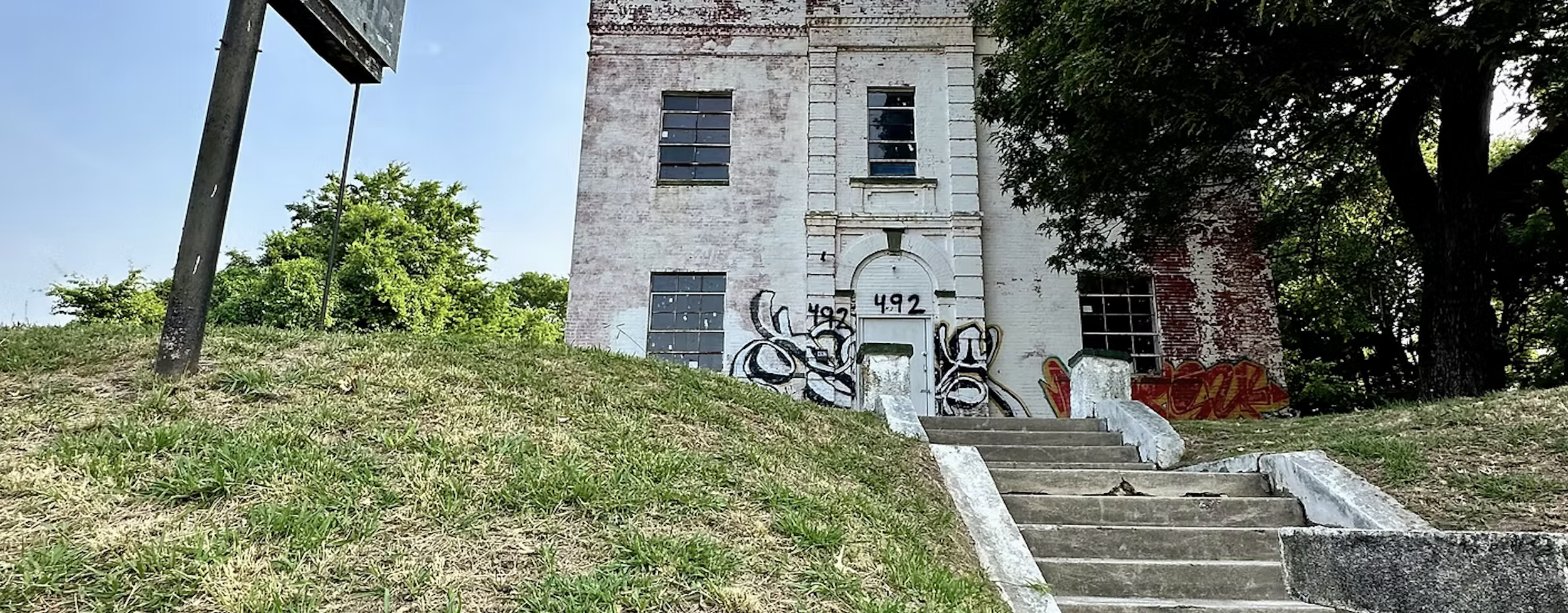
Originally constructed as a house in 1858, the building later became the home of Griggs Business and Practical Arts College, one of the first historically Black colleges in Memphis. Vacant since the 1980s, the building still bears the faint outline of the words "Griggs College" on its exterior—a reminder of its past that deeply resonates with Wade-Armando. Looking at the weathered sign, she remarked, "it refuses to be forgotten."
Her vision is to restore the two-story building and transform the half-acre property into a mixed-use destination with apartments on the upper floor and light retail below. One potential tenant is a technology incubator that would provide small business owners with access to critical tools and resources. She also hopes to add affordable housing to the property, creating a place that both honors the site's history and serves the community's future.
The path to redevelopment has presented its share of challenges. Because the building had been owned by a dissolved church, simply determining who held ownership and how to contact them became a major hurdle. Historic preservation projects also come with unique complexities that require patience and persistence. Throughout the process, Wade-Armando relied on her network to help her figure out how to work through these problems.
She also sees opportunity in the building's location. Situated downtown, the property offers a level of flexibility that suburban zoning would not. While more than 150 years old, the structure remains solid and full of potential, making it an ideal candidate for adaptive reuse.
Wade-Armando feels a responsibility to preserve a place that played an important role in Memphis history while helping ensure that story is not lost. Through neighborhood outreach, she has found that many nearby residents were unaware of Griggs College or the significance of the abandoned building. She also reflects on the neighborhood's broader history, describing South City as once having been a "black Mecca" where Black-owned businesses flourished before the community was disrupted following Dr. Martin Luther King Jr.'s assassination and urban renewal projects.
The project has also reshaped how she thinks about development itself. Before her IncDev training, development seemed like something large, daunting, and out of reach. Today, she sees it as a series of manageable steps that ordinary people can take to improve their communities.
Her work now extends beyond Memphis. For the past eight years, Wade-Armando has split her time between Memphis and Puerto Rico, where she is involved in historic preservation efforts. She is also working on a preservation project in the Dominican Republic on a property she purchased with her Dominican husband. Whether in Memphis, Puerto Rico, or the Dominican Republic, the common thread is preserving meaningful places while creating opportunities for future generations.
For anyone considering an Incremental Development Alliance training, her advice is straightforward. She believes many promising projects never move forward because people lack the support network needed to navigate financing, zoning, legal issues, and countless other challenges. IncDev, she says, provides those connections.
Wade-Armando says: "If they had a project, and if it's something they truly cared about then I would say, do it, because it's this training that's going to help them bring that project to life."
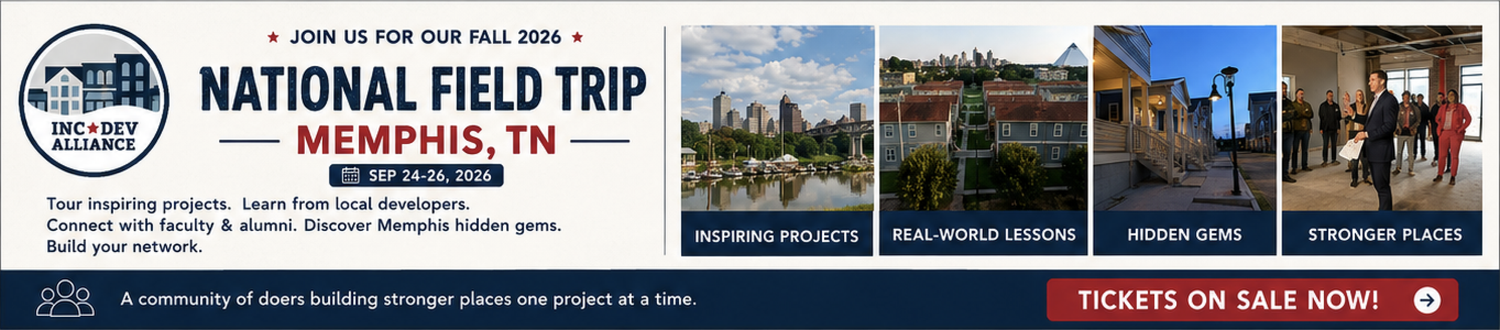
Want to see more innovative projects and meet developers like Stephanie who are shaping the future of Memphis? Join us for our National Field Trip to Memphis, September 24-26, 2026. Learn more and sign up here.
Thanks to video creator and storyteller Hope Henchey for the reporting for this article.